Connectivity
5 benefits of building with eUICC
How can eUICC SIMs simplify your IoT deployment? We walk through what eUICC is and when it makes the best sense for your devices.

July 9, 2026
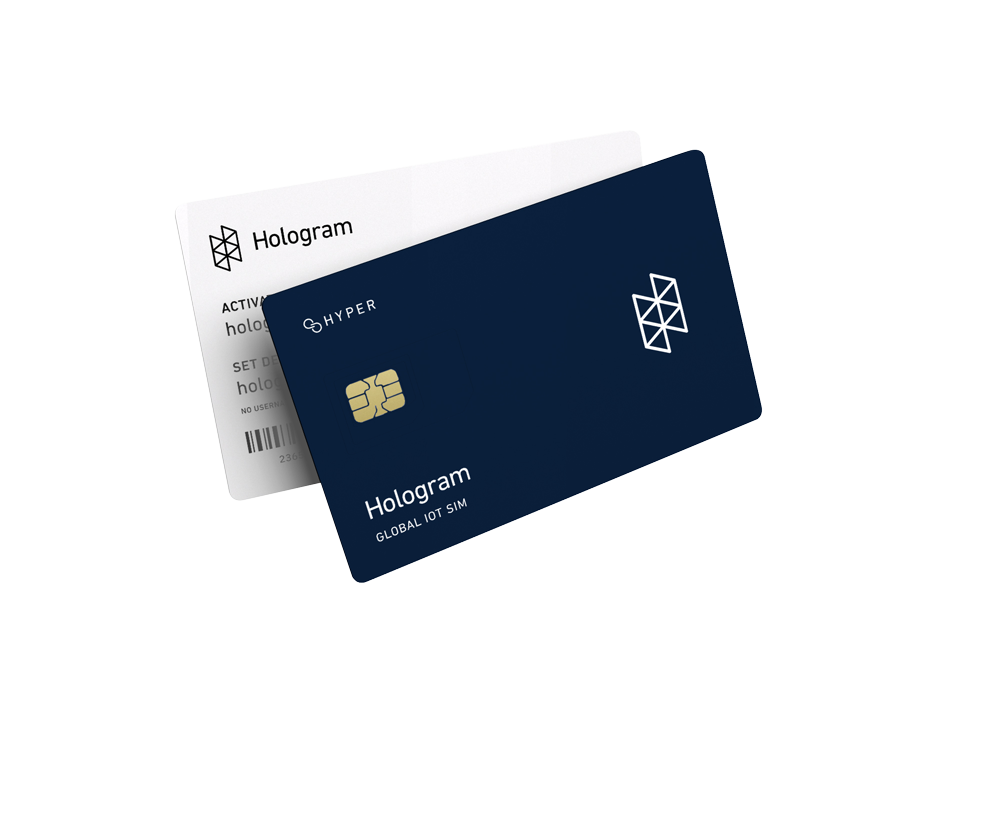
Deploying IoT devices across regions used to mean choosing a carrier before you shipped, then hoping that choice held up for the life of the hardware. eUICC (embedded Universal Integrated Circuit Card) changes that. It is the specification that lets a SIM hold and switch between carrier profiles remotely, so you can change networks after a device is already in the field.
One point clears up most confusion: eUICC is the software capability, not a form factor. An eSIM is the physical embedded SIM soldered into a device, while eUICC is what makes any SIM, embedded or removable, remotely reprogrammable. SGP.02 is the established machine-focused standard for managed fleets, and SGP.32 is the newer IoT-focused standard that streamlines remote provisioning for constrained devices.
Key takeaways
- eUICC is a software capability, not a form factor, so it can run on both embedded and removable SIMs while an eSIM is only the physical hardware.
- A single eUICC SIM reaches across 190+ countries and 550+ carriers, which collapses region-specific SKUs into one part and shortens the supply chain.
- Over-the-air profile switching lets you change carriers on devices already in the field, so a coverage gap or a better rate never needs a truck roll.
- Matching each device to the right network, rather than one flat plan, trims spend and sidesteps roaming surcharges as fleets scale.
- Support for both SGP.02 and SGP.32 keeps your fleet flexible as standards and carrier options evolve.
How eUICC transforms IoT connectivity
Benefit 1: Single SIM works for multiple global deployments
Traditional SIMs force project managers to predict where every device will end up before it ships. You need the right regional SIM installed in the right device, shipped to the right customer. Get the logistics wrong, and you are sending technicians to swap SIMs in the field.
eUICC changes this: one card (or one soldered eSIM) works for every global deployment. A device manufactured in Shenzhen can ship to a warehouse in Chicago, then deploy to a customer in Munich, then relocate to a site in Tokyo, all on the same SIM. The carrier profile updates over the air at each step.
Impact on manufacturing: Instead of maintaining separate SKUs for North America, Europe, and APAC, you build one hardware version. This simplifies your bill of materials, reduces inventory carrying costs, and shortens procurement cycles.
Benefit 2: Update SIM profiles after deployment
Centralized profile management stores multiple profiles on a single eUICC card. For devices that move across regions (asset trackers, shipping monitors, fleet vehicles), you preload every needed profile before deployment and activate the right one remotely when the device arrives.
Post-deployment management includes:
- Adding new profiles to expand regional coverage as your business enters new markets
- Deleting outdated profiles when you exit a region or a carrier sunsets a network
- Updating firmware over the air to support new network protocols, security patches, or carrier requirements
- Switching profiles to respond to carrier pricing changes, coverage issues, or performance problems
Benefit 3: Spend less on data connectivity
Data connectivity is one of the largest ongoing costs in any IoT deployment. eUICC reduces these costs through two mechanisms:
Regional rate optimization. Instead of paying international roaming rates, eUICC lets you load a local carrier profile in each deployment region. A fleet of 5,000 devices in Germany can run on a local Deutsche Telekom profile at domestic rates rather than roaming on your home carrier's international plan.
Single SKU efficiency. Traditional multi-region deployments require separate SIM orders for each market. Each order has minimum quantities, different lead times, and separate shipping logistics. eUICC consolidates this into a single SIM purchase.
Benefit 4: The provider handles carrier negotiations
Negotiating rates and coverage terms with carriers in every deployment region is a full-time job. Carrier-agnostic connectivity providers manage these relationships on your behalf, handling coverage optimization, data cost negotiations, and profile flexibility across their carrier network.
Benefit 5: Scale quickly
The eUICC approach removes physical SIM logistics from your supply chain entirely. No wrong-card-to-wrong-customer shipping errors. No regional inventory forecasting. No field service visits for carrier changes. Let’s compare the two approaches:
Traditional SIM approach
- Determine where each device will deploy
- Order the correct regional SIM cards
- Match correct SIMs to correct devices during manufacturing
- Ship devices with the right SIM to the right customer
- If a device moves regions, send a technician to swap the SIM
eUICC approach
- Order one type of SIM for all devices
- Manufacture with a single hardware build
- Ship devices anywhere
- Activate the right carrier profile remotely when the device reaches its destination
- If a device moves regions, update the profile over the air
Choosing eUICC SIMs for business and industrial deployments
For business buyers weighing top-rated eUICC options, the selection criteria matter more than any single spec. Look for:
- Broad multi-carrier reach, so devices connect wherever they land.
- Non-steered profiles, so the SIM picks the best network rather than a preferred one.
- Remote provisioning through a dashboard and API, so you manage the fleet without touching hardware.
- Support for both SGP.02 and SGP.32, so you are not locked into one standard as your fleet evolves.
- A transparent provider that advocates for your deployment rather than upselling coverage you will not use.
Industrial sensor fleets should weight durability and multi-carrier failover heavily, because those devices run for years in demanding sites and cannot afford single-network dependence.
Migration path: traditional SIMs to eUICC
If you already run devices on fixed-profile SIMs, moving to eUICC does not have to mean replacing hardware. The practical path is to plan new deployments on eUICC SIMs, then bring existing fleets over as devices cycle. A connectivity partner can map the migration to your device lifecycle so the switch adds flexibility without disruption.
Here is a practical migration path:
- Assess hardware compatibility. Check whether your device's modem and SIM slot support eUICC. Most modern cellular modules (from Quectel, Sierra Wireless, Telit, u-blox) support eUICC out of the box.
- Evaluate your connectivity provider. Your provider needs to support eUICC provisioning and remote profile management. Ask about SGP.22 compliance and available carrier profiles in your deployment regions.
- Start with new deployments. The lowest-risk approach is to use eUICC for all new devices while keeping existing devices on traditional SIMs until their next hardware refresh.
- Plan a phased swap for existing devices. For devices with accessible SIM slots, schedule SIM replacements during routine maintenance visits. Embedded SIM devices will transition at the next hardware generation.
- Test carrier switching. Before full rollout, test over-the-air profile switching in your target regions to verify coverage and failover behavior.
Considering migration to eUICC?
Evaluate whether eUICC fits your use case by asking:
- Would over-the-air provisioning significantly reduce your operational costs and field service visits?
- Does your existing hardware (or next-generation hardware) support eUICC?
- Do your target deployment areas have carrier profiles available through your connectivity provider?
- What data sovereignty and regulatory requirements apply in your deployment countries?
FAQs
What are the benefits of eUICC for IoT devices?
eUICC delivers five core benefits that matter most to IoT deployments.
- Remote provisioning: activate and switch carrier profiles over the air after deployment.
- Carrier flexibility: move between networks without swapping hardware.
- Global coverage: one SIM connects across 190+ countries and 550+ carriers.
- Future-proofing: adapt to new carriers or standards as your fleet grows.
- Simplified logistics: ship one SKU instead of region-specific variants.
Is eUICC worth it for business IoT deployments?
Yes, for most fleets that operate at scale or across regions. eUICC pays off when devices ship to multiple markets, run for long lifecycles, or may need to switch carriers later. For a small single-market pilot on one reliable network, the flexibility matters less, but even then it protects you if that network changes.
Is eUICC ready for production IoT deployments?
Yes. The GSMA's SGP.22 and SGP.32 specifications standardize remote SIM provisioning and are supported by major carriers and chipset vendors. Millions of IoT devices worldwide run eUICC-enabled SIMs in production today across healthcare, logistics, agriculture, and industrial applications.
What happens if a carrier sunsets a network after deployment?
With eUICC, you switch to an alternative carrier profile over the air. No field visits, no hardware changes, and no device downtime beyond the seconds it takes to load the new profile. This is a major advantage over traditional SIMs, which would require physical replacement across every affected device.
Does eUICC work for medical devices that need regulatory approval?
Yes. eUICC does not change the device's hardware or core functionality, so it typically does not affect existing regulatory certifications (FDA, CE, etc.). The SIM card or module remains the same physical component. However, you should confirm with your regulatory team that over-the-air profile updates are covered under your device's certification scope.