Build smarter, more resilient factories
Manufacturing turns raw materials into finished products on the factory floor. Cellular IoT connects every machine, sensor, and vehicle to reliable networks, giving plants less downtime and real-time visibility.

Get smarter with cellular IoT
Streamline operations
Manage every connected machine, sensor, and vehicle from a single dashboard.
Predict problems early
Collect live sensor data to catch equipment wear and heat spikes before they stop the line.
Scale with confidence
Add thousands of devices across plants on one dependable network that grows with production.
Coordinate robots and cobots
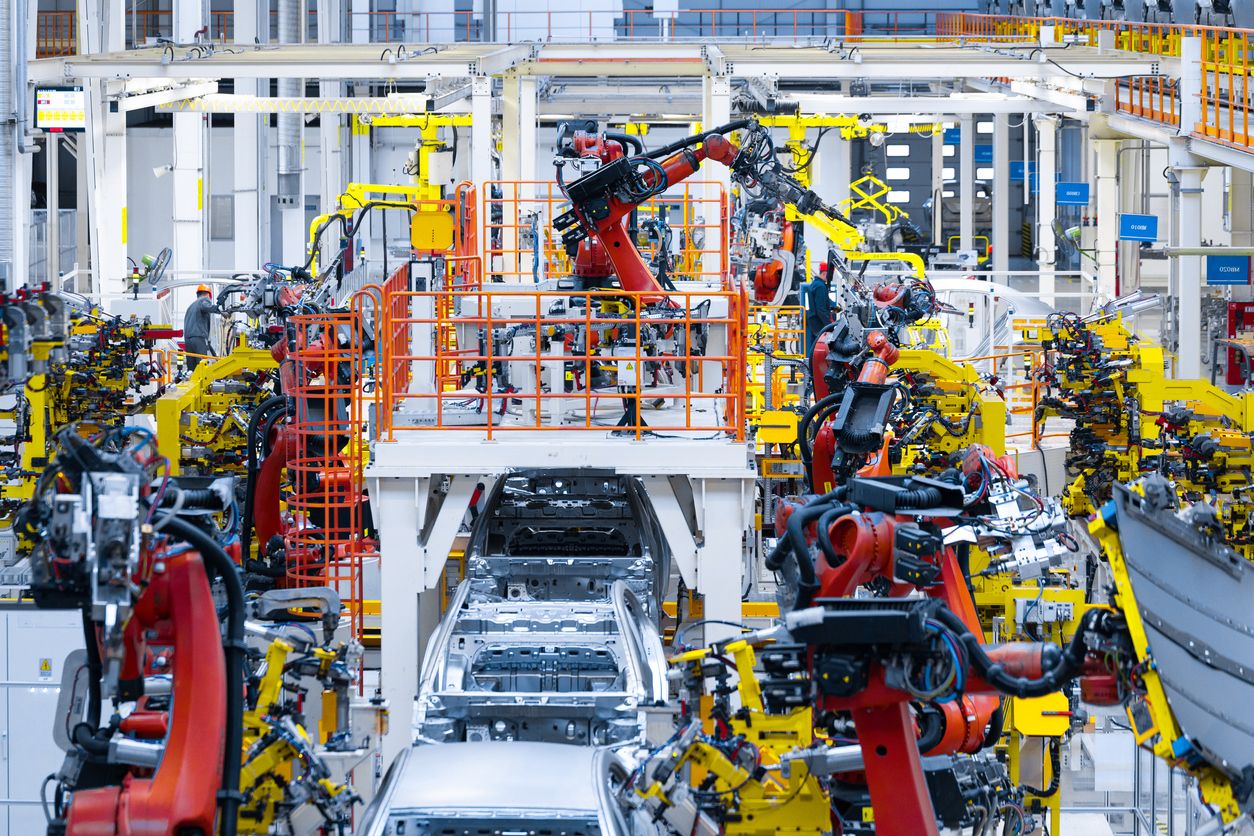
On a busy assembly cell, a collaborative robot hands a torqued panel to a mobile manipulator that pivots and places it on the next station without a pause. Cellular IoT gives these machines steady, low-latency links so motion commands and safety stops travel instantly, even as the floor layout changes. Cellular connectivity keeps each new unit online without stringing more cable across the plant.
Move goods with AGVs
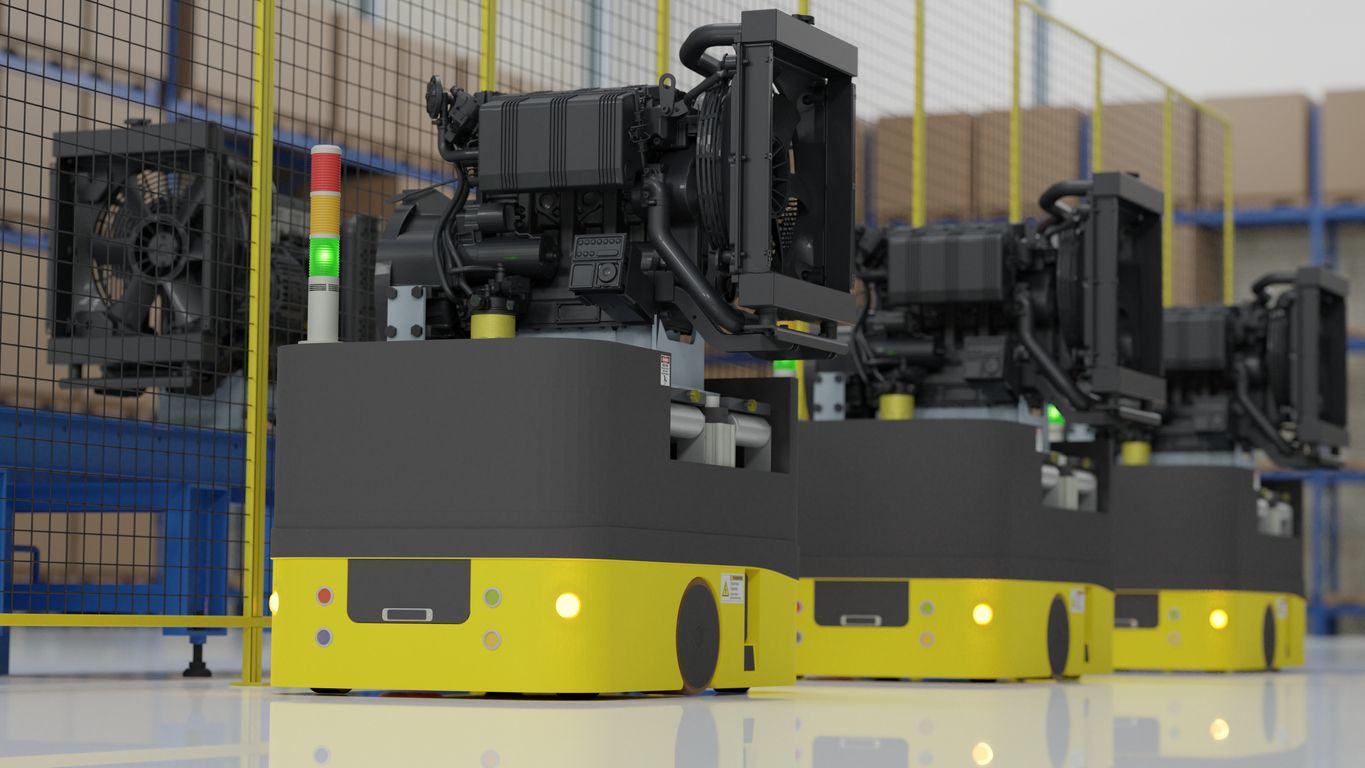
An automated guided vehicle slides out of the staging bay, weaves around a forklift, and drops a pallet at the packing line exactly on schedule. Cellular connectivity lets fleets of these vehicles share position and route data continuously, so they reroute in real time instead of stalling at a blind corner. The global AGV market is projected to grow from 2.68 billion USD in 2025 to 4.72 billion USD by 2032, an 8.7% compound annual rate. More vehicles on the floor means connectivity that hands off cleanly from zone to zone matters even more.
Guide work with AR
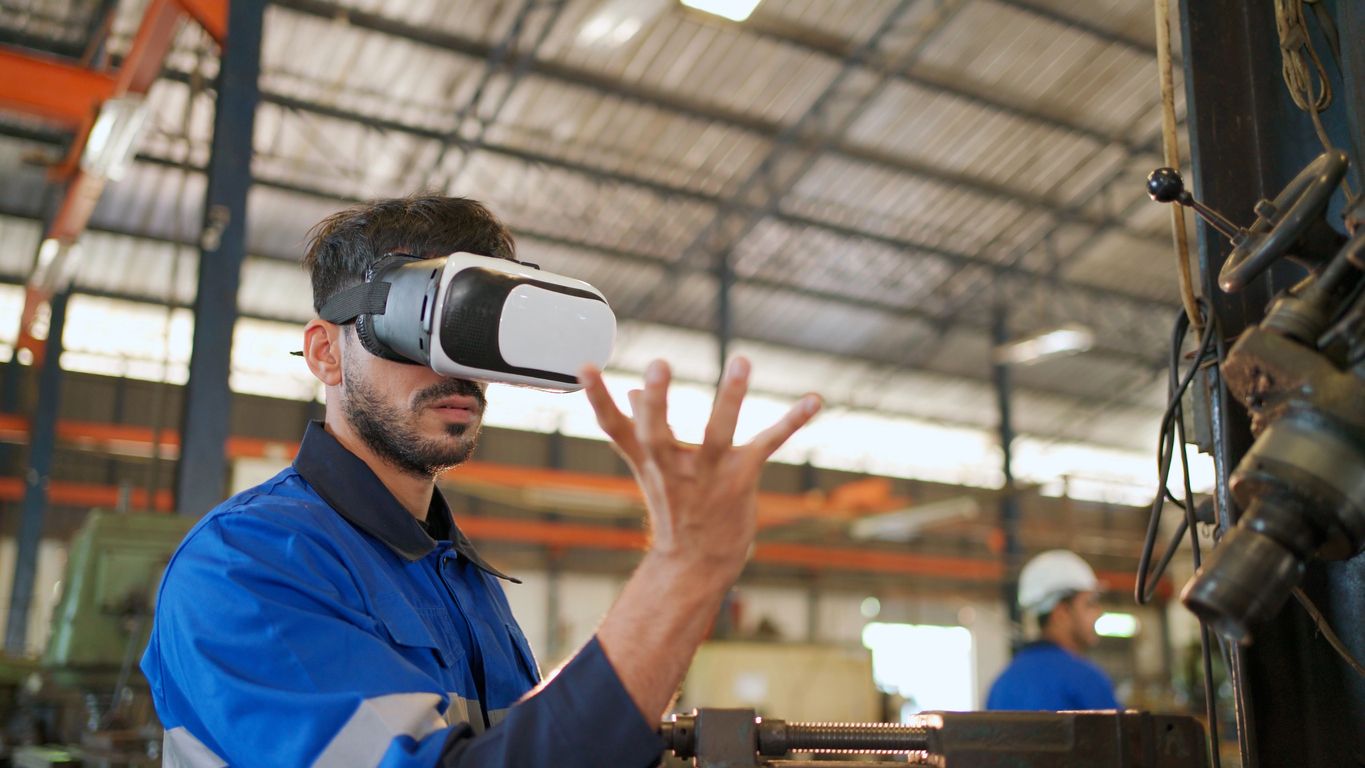
A technician kneels at a jammed conveyor, and a repair sequence appears in the lens of a headset, highlighting the exact bolt to loosen first. Augmented reality also lets a remote expert see the same view and talk a new hire through a fix from another country. Cellular IoT carries the video, overlays, and sensor readings these headsets depend on, so guidance stays sharp when a worker walks past the range of local Wi-Fi. Industrial and manufacturing already holds the largest application share of the augmented reality market.
Put AI on the floor
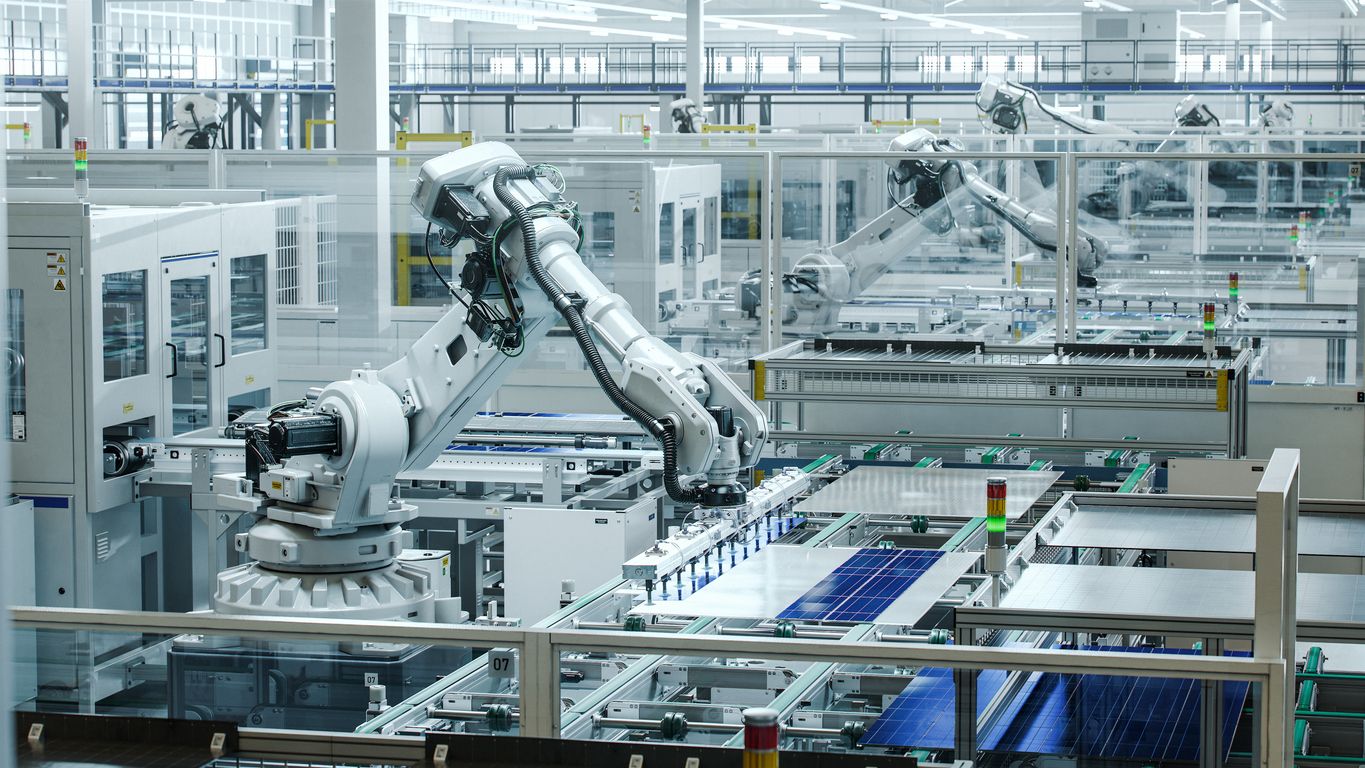
A vision camera above the line flags a hairline crack in a casting and pulls the part before it reaches assembly. Artificial intelligence turns raw camera and sensor feeds into decisions like this, catching defects and tuning throughput faster than a manual check ever could. The AI-in-manufacturing market is expected to expand from 34.18 billion USD in 2025 to 155.04 billion USD by 2030, a 35.3% compound annual rate. Cellular IoT moves those data feeds off the machine reliably, so models keep learning across every shift.
Predict maintenance needs
A vibration sensor on a gearbox notices a bearing running rough and schedules service for the weekend, weeks before it would have seized mid-run. Predictive maintenance reads temperature, vibration, and current draw to fix equipment on its own timeline instead of after a breakdown. Cellular connectivity streams that sensor data continuously, so no early warning gets lost between readings.
Monitor water and wastewater
At a plant's treatment skid, sensors track flow, pH, and turbidity around the clock and open a valve the moment levels drift out of spec. This keeps process water clean and discharge within permit limits without a technician walking the site every hour. Cellular IoT links these remote pumps and tanks, many far from any wired network, back to a central dashboard.

Protect workers with wearables
A wearable on a worker senses a hard fall in an empty mezzanine and alerts the safety team with an exact location within seconds. These devices also watch for heat stress, gas exposure, and repetitive strain across a shift. Cellular IoT keeps wearables connected as workers move through the plant and into areas Wi-Fi never reaches. The global connected worker market is projected to grow from 8.62 billion USD in 2025 to 20.18 billion USD by 2030, an 18.5% compound annual rate, driven in part by growing adoption of safety-focused wearable

Track assets and inventory
A pallet of components rolls off the dock, and its tag checks in at each zone so the line always knows what is on hand and where. Asset and inventory tracking cuts the hunt for missing tooling and keeps just-in-time supply flowing. Cellular IoT tags report inventory location and condition across yards, warehouses, and in-transit trucks, well beyond the reach of a single building's network.

Where manufacturing goes next
Over the next three to five years, more decisions will happen right at the machine instead of after a round trip to the cloud. Cellular IoT is shifting toward local processing and AI inference on the device itself, so a camera or controller can act on what it sees in real time. Higher-bandwidth, lower-latency standards like 5G, 5G RedCap, and eRedCap are making compute-capable devices practical across the whole floor.
That changes what a plant can do. Machines will coordinate directly with each other, rerouting work around a slow station without waiting for a central system to weigh in. Lines will retune themselves mid-shift as conditions change, and safety systems will react in the moment rather than after an alert reaches a screen. Stronger on-device security will let manufacturers push more of this autonomy to the edge with confidence.
Further reading
FAQs
Do I need Wi-Fi to run cellular IoT devices?
No. Cellular IoT devices connect directly through carrier networks, so they work without any Wi-Fi setup. That makes them useful in yards, loading docks, and remote pump stations where Wi-Fi does not reach.
Why choose cellular over Wi-Fi on a factory floor?
Heavy machinery, metal racking, and moving vehicles create dead zones that disrupt Wi-Fi. Cellular connectivity covers the whole site with a steadier signal and hands off cleanly as devices move between zones. It also keeps working when a local access point goes down.
How does cellular IoT handle security?
Each device authenticates to the network through its SIM, and traffic can travel over private, isolated routes rather than the public internet. Encryption protects data in transit, and central management lets teams update or disable a device remotely. These layers give manufacturers strong control over who and what connects.
What is the value of combining wired and wireless connectivity?
Wired links suit fixed, high-throughput stations, while cellular covers mobile equipment and remote corners of the plant. Running both gives a line a fallback path, so a cut cable or a downed access point does not stop production. The result is fewer outages and steadier uptime.
How does cellular IoT scale across multiple sites?
One connectivity platform can manage devices across every plant from a single dashboard, no matter the country. Teams provision, monitor, and bill fleets the same way everywhere, without standing up separate networks per location. That makes adding a new site far simpler.
What is 5G's role in smart manufacturing?
5G brings higher bandwidth and lower latency, which supports real-time control, dense sensor grids, and video-heavy uses like AR. Newer profiles such as 5G RedCap fit lighter industrial devices at lower cost. Together they let more of the floor run on capable, responsive connections.
—Bali Harmath, CEO, Cloud Monitoring

“The biggest benefit of working with Hologram for us is, without hesitation, reliability.”
Bali Harmath
CEO, Cloud Monitoring