Use cases
10 best IoT asset tracking systems
Looking for an IoT asset tracking system? Here's our roundup of the best options.

February 2, 2026
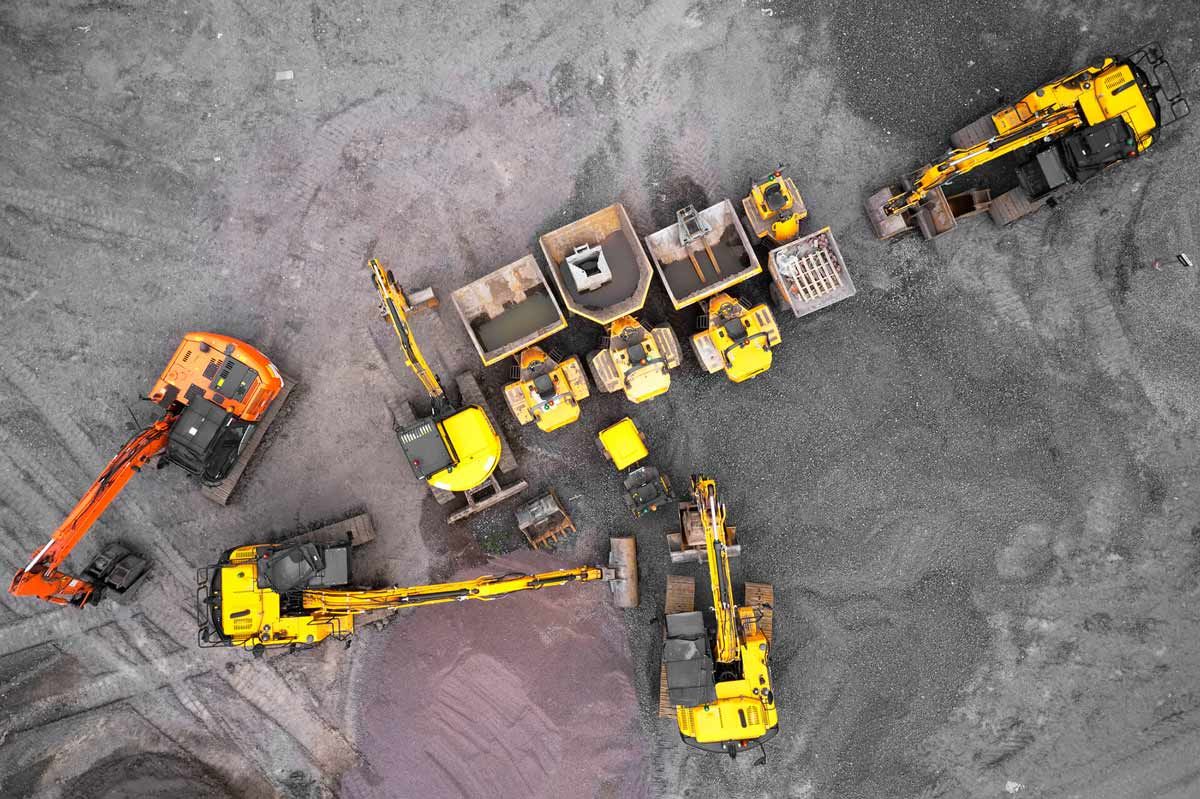
Every organization that deals in physical assets, like vehicles, product shipments, or rented machinery, needs a way to keep track of the equipment. Barcodes emerged in the 1970s, providing a way to scan and identify items and, among other things, track assets. Today, IoT asset tracking is emerging as an affordable and dynamic way to keep closer tabs on movable resources, with millions of RFID/asset trackers now in use worldwide.
What is IoT asset tracking?
Asset tracking (as opposed to inventory tracking) focuses on a company's reusable resources, such as machinery, vehicles, reusable containers, and other tools, that are on the move that the company doesn't want to get lost or stolen.
IoT asset tracking involves affixing sensors to those resources to track their movements. The sensors contain GPS chips, which work by sending coordinates (determined via contact with a GPS satellite) to GPS servers via some type of wireless network technology.
Real-time asset tracking requires near-constant connectivity, usually cellular. The sensors send out location information, which is received and collected in an asset tracking management system or other software. This gives organization leaders a clear picture of where their assets are at any given moment.
Radio-frequency identification (RFID) is one form of asset tracking that doesn't require a constant connection. An RFID tag includes a radio receiver and transmitter, which are triggered when the tag comes within range of an electromagnetic pulse from an RFID reader.
While RFID asset tracking works well for many use cases, it's dependent on external hardware (RFID reader devices) to prompt the tags to report their location. It's helpful for tracking a container during shipment, for example. But, if the container is lost or stolen and never comes close to another RFID reader device, there's no way to track it down.
As cellular IoT devices and connectivity become more affordable and efficient, many organizations are opting for real-time asset tracking systems.
What software platforms manage IoT asset tracking data?
While asset tracking hardware captures location and sensor data, specialized software platforms process, analyze, and visualize this information. These platforms range from enterprise cloud solutions to open-source alternatives:
Enterprise cloud platforms
AWS IoT Core provides scalable device connectivity and data processing for millions of tracking devices, with integrated analytics through AWS IoT Analytics. Microsoft Azure IoT Hub offers similar capabilities with strong integration into Microsoft's business ecosystem. IBM Watson IoT leverages AI-powered analytics for predictive maintenance and advanced insights from tracking data.
Specialized tracking platforms
Datadog IoT Monitoring excels at infrastructure and device performance monitoring with customizable dashboards. ThingsBoard provides an open-source platform for device management and data visualization, while Particle's Cloud Platform (mentioned below) offers an integrated hardware-software solution.
Open source solutions
ThingSpeak offers a lightweight, API-centric platform for data logging and analysis with MATLAB integration. Apache IoTDB serves as a high-performance time-series database optimized for IoT data storage and querying, ideal for organizations building custom tracking solutions.
What are some of the communication technologies IoT asset trackers use?
Bluetooth
Bluetooth Low Energy (BLE) is a good solution for short-range situations, where the asset in motion will remain within range of devices that can receive its signals. BLE tags are inexpensive and offer up to 10 years of battery life, making them very attractive if you have large numbers of assets to track within a tight grid of infrastructure.
LPWAN
Low-power, wide-area network options such as narrowband IoT (NB-IoT), LTE-M, Sigfox, and LoRa provide long battery life and dependable long-range connectivity for asset trackers. The tags cost more than BLE, but are able to operate without as much infrastructure (NB-IoT tags connect directly to the cellular network, rather than needing a gateway). If you need continuous connectivity for real-time tracking, though, these technologies are not ideal as they are designed for periodic check-ins and cannot support tower hand-offs.
2G/3G/4G/LTE
Other cellular technologies are viable options for asset tracking, but they tend to be more expensive and use more power, so they are a better choice for assets that require connectivity for other reasons (such as a connected machine that collects and sends data to the cloud) and/or those that can provide an external power source.
Recommended reading: Guide to IoT asset tracking.
What are the 10 best IoT asset trackers?
As asset-tracking technology grows, so have dozens (if not hundreds) of asset tracking products, software, and services. We've put together a list of the ten best IoT asset trackers currently on the market for a variety of use cases.
Samsara
Specializing in industrial IoT (IIoT), Samsara has several popular asset tracking devices allowing customers to track in real time or through periodic check-ins. The Samsara AG24 is designed to track powered assets in real time, while the more affordable AG46 unpowered asset tracker provides a low-power option with customizable GPS check-ins.
Key features:
- Real-time GPS tracking with cellular connectivity
- Integrated fleet management dashboard
- Geofencing and automated alerts
- API integrations for custom applications
- Predictive maintenance capabilities
Best for: Medium to large fleets requiring comprehensive tracking and management features.
Omnitracs
Targeted to vehicle fleet tracking, Omnitracs offers a full suite of services including fleet telematics, driver and vehicle performance monitoring, and trailer tracking. The company's expertise in fleet management means their tracking services provide lots of helpful information beyond asset location—including predictive maintenance, diagnostic information, and fuel data even for remote assets.
Key features:
- Comprehensive fleet telematics
- Driver performance monitoring
- Predictive maintenance alerts
- Fuel consumption tracking
- Regulatory compliance tools
Best for: Transportation and logistics companies with large vehicle fleets
Hilti ON!Track Asset Management
Hilti's ON!Track system includes software, hardware, and support for construction companies that need to keep track of tools and equipment on jobsites. Some of the smart tags use BLE, while others use barcodes. The cloud-based software management system helps contractors manage tools, find missing equipment, and keep track of preventative maintenance needs.
Key features:
- BLE and barcode tracking options
- Construction-specific tool management
- Maintenance scheduling
- Theft prevention alerts
- Mobile app for field teams
Best for: Construction companies managing tools and equipment across multiple job sites.
AT&T Fleet Complete
The AT&T Fleet Complete service depends on LTE-M connectivity, a low-power wide-area network technology. The AT1 sensor is one of the smallest on the market (4" by 2") and captures GPS information along with other data such as humidity and temperature readings, light exposure and impact status. The solution utilizes solar power for recharging and is suited for monitoring assets in many industries, including medical supplies, construction materials, and machinery.
Key features:
- LTE-M connectivity with solar charging
- Multi-sensor data collection (GPS, temperature, humidity, impact)
- Compact design (4" x 2")
- Long battery life with solar recharging
- Weather-resistant housing
Best for: Organizations needing long-term deployment with minimal maintenance.
Azuga
A specialist in fleet tracking, Azuga also provides sensors to track physical assets such as small equipment and shipping containers. The connected sensors use GPS and cellular technology with rechargeable batteries that last six months per charge. Azuga also offers geofencing, a feature that lets you draw an invisible line around your assets and receive an alert whenever a tagged item leaves the designated area.
Key features:
- GPS and cellular tracking
- 6-month battery life
- Geofencing with automated alerts
- Real-time location updates
- Mobile and web dashboards
Best for: Small to medium businesses tracking equipment and containers.
Keeptruckin
Designed for use in the shipping industry, Keeptruckin's asset trackers operate continuously either through a power connection to the trailer or charging with an integrated solar panel. The sensors use cellular connectivity to report GPS coordinates and other statistics to the server, where users can access the data through cloud-based software. Keeptruckin supports geofencing, and can send an alert if a vehicle appears outside its stated boundaries.
Key features:
- Continuous tracking with power or solar charging
- Cellular connectivity for real-time updates
- Geofencing capabilities
- Cloud-based dashboard
- Integration with ELD systems
Best for: Trucking companies and shipping businesses with trailers and containers.
EROAD
EROAD offers comprehensive fleet management, including integrated asset tracking. Their tracker uses 4G connectivity and feeds all collected data to a single dashboard, allowing users to manage shipping fleets while keeping track of regulatory compliance. The EROAD tracker's batteries last up to six months, and a 12- or 24-volt power source can also be used to run the unit.
Key features:
- 4G connectivity with 6-month battery life
- Regulatory compliance tracking
- Unified fleet management dashboard
- Multiple power options (battery or vehicle power)
- Driver behavior monitoring
Best for: Fleet operators requiring compliance monitoring and comprehensive vehicle management.
ATTI
Advanced Tracking Technologies Inc. (ATTI) lets users track both fixed and mobile assets, enabling real-time GPS monitoring for a diverse set of objects, from trailers and heavy equipment to boats and motor vehicles. ATTI's tracking devices are small and easy to set up, and they're powered either by 4 AAA batteries or a 5V external power line. Battery life is typically around 1.5 years, and the trackers can store one year of historical data.
Key features:
- Real-time GPS tracking for fixed and mobile assets
- 1.5-year battery life with AAA batteries
- One year of historical data storage
- Easy installation and setup
- Multiple asset type support
Best for: Organizations with diverse asset types requiring long battery life.
Asset Monitoring Solutions (AMS)
A company specializing in fleet management solutions, AMS includes GPS and asset tracking for powered and non-powered assets. They have several types of trackers and use multi-network roaming SIM cards to provide dependable cellular connectivity, even internationally. Most of AMS's trackers depend on power from a running vehicle, but they have a few that run on lithium and/or rechargeable batteries.
Key features:
- Multi-network roaming SIM cards for global coverage
- Both powered and battery-operated options
- International connectivity
- Fleet management integration
- Multiple tracker variants for different use cases
Best for: Companies with international operations requiring global connectivity.
Particle
The Particle Tracking System enables real-time asset location monitoring along with additional data capture, such as temperature and acceleration sensors. The system's open firmware enables users to add additional IoT sensors and manage everything together on the Particle IoT Platform. The trackers use Cat-M cellular technology in North America and LTE Cat-1 with 3G/2G fallback in Europe, the Middle East, and Asia.
Key features:
- Real-time tracking with multi-sensor capabilities
- Open firmware for custom sensor integration
- Integrated IoT platform for device management
- Global cellular connectivity (Cat-M, LTE Cat-1, 3G/2G)
- Developer-friendly APIs
Best for: Tech-savvy organizations needing customizable tracking solutions with additional sensor data.
Choosing the right IoT asset tracking solution
Selecting the best asset tracking system depends on your specific needs:
By business size
The scale of your operations is a primary factor in determining the most suitable IoT asset tracking solution. Matching the system's scalability and complexity to your number of tracked assets ensures cost-effectiveness and efficient management.
- Small businesses (1-100 assets): Consider cost-effective solutions like Particle or Azuga with simple hardware trackers.
- Medium businesses (100-1,000 assets): Samsara or Omnitracs provide scalable platforms with robust management features.
- Enterprise (1,000+ assets): AWS IoT or Azure IoT platforms offer unlimited scalability and advanced analytics.
By industry focus
Different industries have unique asset tracking requirements and operational environments. Selecting a solution with features tailored to your specific sector, such as fleet logistics or construction site management, will maximize its utility.
- Fleet management: Omnitracs, Keeptruckin, and EROAD specialize in vehicle tracking with logistics-specific features.
- Construction: Hilti ON!Track focuses on tool and equipment tracking for job sites.
- General assets: Samsara and AT&T Fleet Complete work across multiple industries.
Key evaluation criteria
Beyond business size and industry, several technical and commercial factors must be carefully evaluated. Considering criteria like connectivity, battery life, and pricing model is crucial for long-term viability and return on investment.
- Connectivity requirements: Real-time (cellular) vs periodic check-ins (LPWAN)
- Battery life: Solar-powered vs rechargeable vs replaceable batteries
- Software features: Geofencing, predictive maintenance, API integrations. etc.
- Pricing model: Per-device vs platform licensing vs data usage
- Global coverage: Domestic only vs international roaming capabilities
- Integration capabilities: API access and compatibility with existing business systems
As IoT sensors and systems become more widespread and affordable, more companies will adopt some type of asset tracking systems. The ability to login to a cloud-based portal and get a bird's-eye view of your trucking fleet, machinery, or construction assets can go a long way toward streamlining your business processes, resulting in greater efficiencies and cost savings.