These cellular IoT trends will reshape connectivity in 2026
5G RedCap, eSIM, and satellite tech are reshaping cellular IoT in 2026 as the focus shifts from pilot projects to massive, secure, global deployments.
The cellular IoT market is crossing a threshold in 2026 where connectivity stops being a technical challenge and starts becoming a strategic advantage. Businesses are moving from pilot projects to production fleets of thousands of devices, and the infrastructure supporting them, from 5G RedCap to satellite integration, can deliver on promises made years ago.
This shift brings seven trends that are reshaping how companies connect, manage, and scale their IoT deployments: new cellular standards filling bandwidth gaps, legacy network sunsets forcing migrations, satellite networks going mainstream, embedded SIM technologies enabling remote management, edge AI moving intelligence to devices, new security regulations, and unified management platforms.
Why 2026 is a tipping point for cellular IoT
Cellular IoT is moving from simple data collection to intelligent action. By 2026, the market will layer mature technologies like LTE-M and NB-IoT for massive deployments alongside emerging 5G RedCap for mid-tier bandwidth needs, all enhanced by AI, eSIM security, and satellite coverage. The shift marks a transition from connecting devices to creating real business value through automation and predictive systems.
Global spectrum shifts and 3G shutdown deadlines
Thirty-seven operators will phase out 2G and 39 will retire 3G networks throughout 2025 and 2026, forcing millions of legacy IoT devices to migrate. North American carriers are furthest along in the transition, while some European and Asian markets are extending 2G support into 2027. The timeline varies by region, but the message is clear: legacy networks are going away, and businesses running 2G or 3G devices face a hard deadline.
Enterprise demand crossing 1000-device scale
Businesses are moving beyond 50-device pilots into production fleets spanning thousands of endpoints across multiple countries. At this scale, connectivity becomes strategic rather than tactical. Downtime costs multiply, manual troubleshooting becomes impossible, and the complexity of managing multiple carrier relationships starts to hurt. Companies deploying at this level need multi-carrier redundancy, real-time diagnostics, and global coverage without the headache of juggling separate carrier portals.
Trend 1: 5G RedCap unlocks mid-tier bandwidth and battery life
5G RedCap (Reduced Capability) is a new cellular standard designed for IoT devices that need more bandwidth than LTE-M can provide but don't require full 5G speeds. RedCap targets the middle ground—perfect for video surveillance, wearables, smart meters, and industrial sensors that stream moderate data without draining batteries in days. RedCap devices can hit 150 Mbps downlink and 50 Mbps uplink while consuming far less power than standard 5G modules. Here’s a quick capability comparison across cellular IoT technologies:
- LTE-M: Low-power, low-bandwidth applications like asset tracking (up to 1 Mbps)
- NB-IoT: Ultra-low-power, infrequent data like parking sensors (up to 250 kbps)
- 5G RedCap: Mid-tier option for video and industrial automation (up to 150 Mbps)
- Standard 5G: High-bandwidth applications like autonomous vehicles (multi-gigabit speeds)
In addition to closing the gap in speed, 5G RedCap can offer developers and their customers new technical advantages. From an engineering perspective, RedCap retains key 5G benefits like network slicing and security but simplifies hardware. RedCap devices have simpler radios, fewer antennas (2 vs 4), leading to lower module costs (up to 50% less). Since RedCap devices support longer sleep cycles (hours), it also dramatically improves battery life.
Coverage expectations through 2026
5G RedCap fills a gap in connectivity options, especially for massive IoT applications, offering a powerful mix of speed, power efficiency, and affordability. RedCap is looking very promising for managing huge numbers of connected devices that need to run for several years.
Major carriers in North America, Europe, and Asia already see the benefits for their customers. RedCap rollouts started in 2025, with 34 operators in 24 countries already investing in the technology and broader availability expected throughout 2026.
Coverage will concentrate initially in urban areas and industrial zones where 5G Standalone networks already exist, with 154 operators investing in 5G Standalone as of Q1 2025. Rural coverage will lag by 12 to 18 months in most markets, so early adopters will see the best results in cities first.
RedCap module pricing trajectory
One of the key factors driving the adoption of new cellular IoT standards is the cost of the hardware, and the pricing trajectory for RedCap modules is becoming increasingly attractive. Early RedCap modules cost $30 to $50 per unit, but prices are expected to drop to $15 to $25 by late 2026 as production scales up. This pricing will make RedCap competitive with Cat-4 LTE modules for many applications, especially when you factor in longer network lifespan and improved capabilities.

Hyundai and Samsung prove 5G RedCap can power the next wave of connected factories
Hyundai Motor Company and Samsung Electronics have completed a groundbreaking trial of 5G RedCap technology at Hyundai's Ulsan Plant—the world's largest single automotive manufacturing facility. RedCap is specifically designed to extend the benefits of 5G to smaller, battery-operated devices like sensors, cameras, and inspection tools that don't require the full bandwidth of standard 5G. This fills a critical gap in industrial connectivity: until now, private 5G was reserved for high-performance equipment, while lower-power devices were stuck with less reliable WiFi connections prone to interference and instability.
The benefits of 5G RedCap are significant for IoT deployments at scale. Hyundai's trial demonstrated lower power consumption for connected devices, increased uplink capacity for real-time data transmission, and enhanced automation across factory operations. By integrating Qualcomm's Snapdragon X35 5G modem into its Diagnostic Scan system, Hyundai enabled real-time wireless vehicle inspections with the reliability that WiFi couldn't deliver.
As RedCap adoption expands beyond automotive manufacturing into logistics, healthcare, and other industries, it promises to make 5G-powered IoT more accessible and cost-effective. That will bring enterprise-grade connectivity to devices that previously couldn't justify the power or cost requirements of full 5G infrastructure.
Trend 2: LTE-M and NB-IoT Pivot After 2G/3G Sunsets
LTE-M and NB-IoT are becoming the default replacement for legacy 2G and 3G IoT deployments. Both technologies offer the extended battery life and deep building penetration that made 2G popular, but with better security, lower latency, and carrier commitment to long-term support. By 2026, LTE-M and NB-IoT modules are expected to account for the majority of new cellular IoT module shipments for battery-powered applications requiring multi-year device lifespans.
Module costs have dropped to under $5 in volume, making them economically viable even for low-margin applications. Carriers in North America and parts of Europe have committed to supporting these networks through at least 2035, giving businesses confidence in 10-plus-year device lifespans.
Regional longevity forecasts
Adoption patterns vary by region. North America favors LTE-M for its slightly higher bandwidth and mobility support, while Europe and Asia show stronger NB-IoT deployment for stationary applications like smart metering. The technology choice often comes down to what carriers in your target markets support, though modern multi-mode modules can handle both. This map provided by the GSMA (Global System for Mobile Communications Association,) shows the Mobile IoT commercial launches to-date.
Migration paths for legacy devices
Moving from 2G or 3G to LTE-M or NB-IoT typically requires hardware replacement since the radio technologies are fundamentally different. The process starts by auditing your fleet, choosing between 4G LTE (Cat-M1, NB-IoT, Cat-1) or 5G options, and planning a phased transition to new hardware. This transition often includes leveraging eSIMs for easier over-the-air updates that can help avoid service disruption as carriers shut down legacy networks for more efficient spectrum use. Key paths include moving to LPWANs (LTE-M, NB-IoT) for low-power, low-data devices, or standard LTE/5G for higher bandwidth needs, requiring new modules and careful planning with connectivity partners. This resource can be valuable in helping you make your choice and plan for the transition.
Based on our experience working with customers in their transition, we’ve seen four areas that can create some challenges. Since module compatibility varies by form factor and power budget, testing coverage in deployment locations can help avoid connectivity and performance surprises. It’s important to work with your connectivity partner, as data plan pricing models differ from legacy 2G/3G structures. Additionally, device recertification timelines can add months to migration projects.
Trend 3: Non-terrestrial networks extend coverage beyond cell towers
Non-Terrestrial Networks (NTN) integrate satellite connectivity directly into cellular standards, allowing IoT devices to switch seamlessly between cell towers and satellite links. This solves connectivity in remote locations like offshore platforms, agricultural fields, and shipping routes where traditional cellular coverage doesn't exist. The 3GPP standards body has incorporated NTN support into Release 17 and beyond, making satellite connectivity a native feature of cellular IoT rather than a separate solution.
One module, two networks
The days of choosing between cellular and satellite, or managing both, are coming to an end. Major chipset manufacturers are now shipping hybrid modules with terrestrial cellular and satellite radios into a single package. The smart part? These modules automatically connect to cellular networks when they're available (faster and cheaper) and only switch to satellite when there's no other option. For businesses deploying IoT in mixed environments, this means simpler hardware, fewer integration headaches, and one less decision to make in the field.
Satellite costs are finally making sense
Satellite connectivity has traditionally been an expensive option. But that's changing fast. As new Low-Earth Orbit constellations scale up, pricing is dropping significantly. Industry forecasts suggest satellite data costs will fall to $0.50 to $2.00 per megabyte for IoT applications by 2026. That's still a premium over terrestrial cellular. But when connectivity is mission-critical and the alternative is no connectivity at all, the math starts to work.

LEO satellites are transforming remote industries
Low Earth Orbit (LEO) satellite technology is solving one of the most persistent challenges facing mining, energy, construction, and agriculture: reliable connectivity in places where terrestrial networks simply don't exist. Unlike traditional satellites, LEO constellations deliver high-speed, low-latency connections that can support real-time data transmission, cloud access, and remote operations. This connectivity will unlock smart technologies like IoT sensors, AI analytics, drones, and autonomous equipment in even the most isolated environments.
The impact is immediate and measurable. Field teams gain constant visibility into operations through live data streams from IoT sensors and aerial drones, enabling everything from hazard detection in underground mines to predictive maintenance on offshore energy platforms to precision crop analysis across thousands of acres. With seamless cloud connectivity, remote workers can access complex analytics, GIS mapping tools, and video conferencing as easily as their counterparts in urban offices.
Across sectors, the applications are transformative. Mining operations leverage LEO connectivity for asset tracking, safety compliance, and real-time exploration telemetry. Energy companies monitor remote substations, wind farms, and offshore rigs with uninterrupted SCADA data streams. Construction firms maintain project oversight and worker safety communication on jobsites miles from the nearest cell tower. And agricultural operations optimize yields through autonomous vehicles and sensor networks that respond to conditions in real time.
In each case, LEO satellites provide the reliable backup and primary connectivity that keeps operations running when traditional networks fail.
Trend 4: eSIM, iSIM, and SGP.32 simplify global fleet management
Embedded SIM (eSIM) and integrated SIM (iSIM) technologies are changing how businesses manage cellular connectivity across global device fleets. Instead of plastic cards that need to be physically inserted and replaced, eSIMs are built directly onto the circuit board. iSIMs go even further and embed SIM functionality right into the device's main processor. The result? You can switch carriers, update credentials, or add new network profiles from your desk, not from a bucket truck. According to GSMA, only a third of IoT connections will still use traditional removable SIMs by 2030.
SGP.32 is making remote SIM management easy
SGP.32 is the GSMA specification that makes seamless, over-the-air eSIM management possible for IoT devices at scale. Think of it as the universal language that lets your devices, carriers, and management platforms all communicate, regardless of who manufactured the hardware or which networks you're connecting to. Before SGP.32, remote SIM provisioning for IoT was fragmented and often required proprietary solutions that locked you into specific vendors.
Now, with a standardized approach, you can remotely download new carrier profiles, switch between networks, and manage credentials across your entire fleet from a single dashboard. The standard supports both device-initiated and server-initiated profile downloads, meaning your devices can request new profiles when needed or you can push updates proactively.
For businesses deploying devices across multiple regions or carriers, SGP.32 eliminates the complexity of managing different provisioning systems. That gives you the flexibility to adapt your connectivity strategy as coverage needs, pricing, or regulations change without touching a single device in the field.
Built for the real world
Beyond the operational convenience, iSIM technology delivers tangible hardware benefits that show up on your bottom line. By eliminating the separate SIM chip entirely, manufacturers can reduce component costs, shrink circuit board footprints, and build more compact devices. Security improves as credentials are embedded at the chip level are significantly harder to clone or tamper with than removable cards.
Operations teams also will appreciate that no more SIM slots means no more contact corrosion, no mechanical failures, and no logistics headaches managing physical SIM inventory. Your devices simply work and when business needs change, you adapt with software.
Trend 5: Multi-chip module designs cut cost and power at the edge
Here's a shift happening inside IoT hardware that most businesses won't see, but will definitely feel in their budgets. Manufacturers are moving away from monolithic "do-everything" chips. Instead they are combining multiple smaller components (cellular modems, processors, memory, and AI accelerators) into a single compact module. This approach lets chipmakers mix and match the best components for specific use cases while driving down both cost and power consumption. For businesses deploying thousands of connected devices, that translates directly to longer battery life and better unit economics.
AI at the edge: Faster decisions without the cloud bill
The smartest IoT devices no longer need to phone home for every decision. Modern chipsets now include dedicated neural processing units that run machine learning models directly on the device. This means they can now detect anomalies, predict maintenance needs, or filter data before it ever hits the network.
The business case is compelling: faster real-time responses, significantly lower bandwidth costs, and better data privacy since sensitive information never leaves the device. By 2026, even budget-friendly IoT modules are expected to ship with these AI capabilities built in.
RISC-V: More competition, lower chip costs
For years, ARM has dominated the processor market for IoT devices. That's starting to change. RISC-V, an open-source processor architecture, is gaining serious traction because it eliminates licensing fees and gives chip designers freedom to customize for specific IoT workloads.
Several major manufacturers have RISC-V-based products launching in 2025 and 2026, which means more competition and downward pressure on pricing. While ARM still has the edge in software support today, RISC-V is closing the gap fast—with the potential to shave $0.50 to $2.00 off per-unit chip costs at scale. For high-volume deployments, that adds up quickly.
Trend 6: Security-by-design becomes mandatory across large device fleets
As IoT deployments scale beyond pilot projects into production fleets of thousands or millions of devices, security is shifting from optional to fundamental. Regulators worldwide are introducing mandatory security standards for connected devices, and enterprises are demanding hardware-based security features to protect against increasingly sophisticated attacks. Hardware root of trust, where cryptographic keys are stored in tamper-resistant silicon, is becoming standard even in cost-sensitive applications.
Hardware root of trust and post-quantum prep
A hardware root of trust is a secure element embedded in the device's chip that stores cryptographic keys and performs security-critical operations in an isolated environment. This makes it extremely difficult for attackers to extract keys or modify device firmware, even with physical access to the hardware. By 2026, most new IoT chipsets will include hardware security features as standard rather than optional upgrades.
Chipset manufacturers are also beginning to implement post-quantum cryptographic algorithms that will remain secure even after quantum computers become powerful enough to break today's encryption methods. While practical quantum attacks are still years away, the long deployment lifespans of IoT devices mean that devices shipped in 2026 need to remain secure through the 2030s and beyond.
New compliance frameworks for 2026 deployments
Several new security regulations are taking effect in 2025 and 2026 that will impact IoT device certification and deployment. For example, the EU’s Cyber Resilience Act (CRA) “addresses the inadequate level of cybersecurity in many products, and the lack of timely security updates. It also tackles the challenges consumers and businesses currently face when trying to determining which products are cybersecure and in setting them up securely, making it easier to identify hardware and software with the proper cybersecurity features.”
While no direct "CRA" exists elsewhere currently, countries like the United States, the United Kingdom, Japan, and Israel have robust cybersecurity frameworks and are likely to implement comparable requirements, creating a global baseline for IoT security.
Trend 7: Unified single-pane platforms replace fragmented carrier portals
Managing IoT connectivity across multiple carriers traditionally meant logging into separate portals, dealing with inconsistent APIs, and manually reconciling billing and usage data. This fragmentation becomes unmanageable as device counts grow into the thousands. The industry is shifting toward unified connectivity management platforms that provide a single interface for monitoring, controlling, and optimizing device connectivity across multiple carriers and countries.
Platforms like Hologram take away the complexity of individual carrier networks, providing consistent APIs, unified billing, and intelligent routing that automatically selects the best available network for each device. This approach reduces operational overhead and enables sophisticated use cases like automatic failover and dynamic network selection based on cost or performance requirements.
Real-time diagnostics and API orchestration
Modern connectivity platforms provide granular visibility into device behavior, network performance, and data usage patterns through real-time APIs. You can programmatically query device status, trigger diagnostic tests, change rate plans, or pause service without touching carrier portals. The best platforms also provide proactive alerting when devices exhibit anomalous behavior, such as unexpected data usage spikes or repeated connection failures.
Multi-carrier redundancy in one dashboard
Instead of maintaining relationships with multiple carriers in different countries, a unified platform gives you access to hundreds of carrier networks worldwide through a single integration. Devices can automatically switch between carriers based on coverage, cost, or performance, and you manage everything through one dashboard and one API. This approach is particularly valuable for global deployments where device locations span multiple countries and carrier networks.
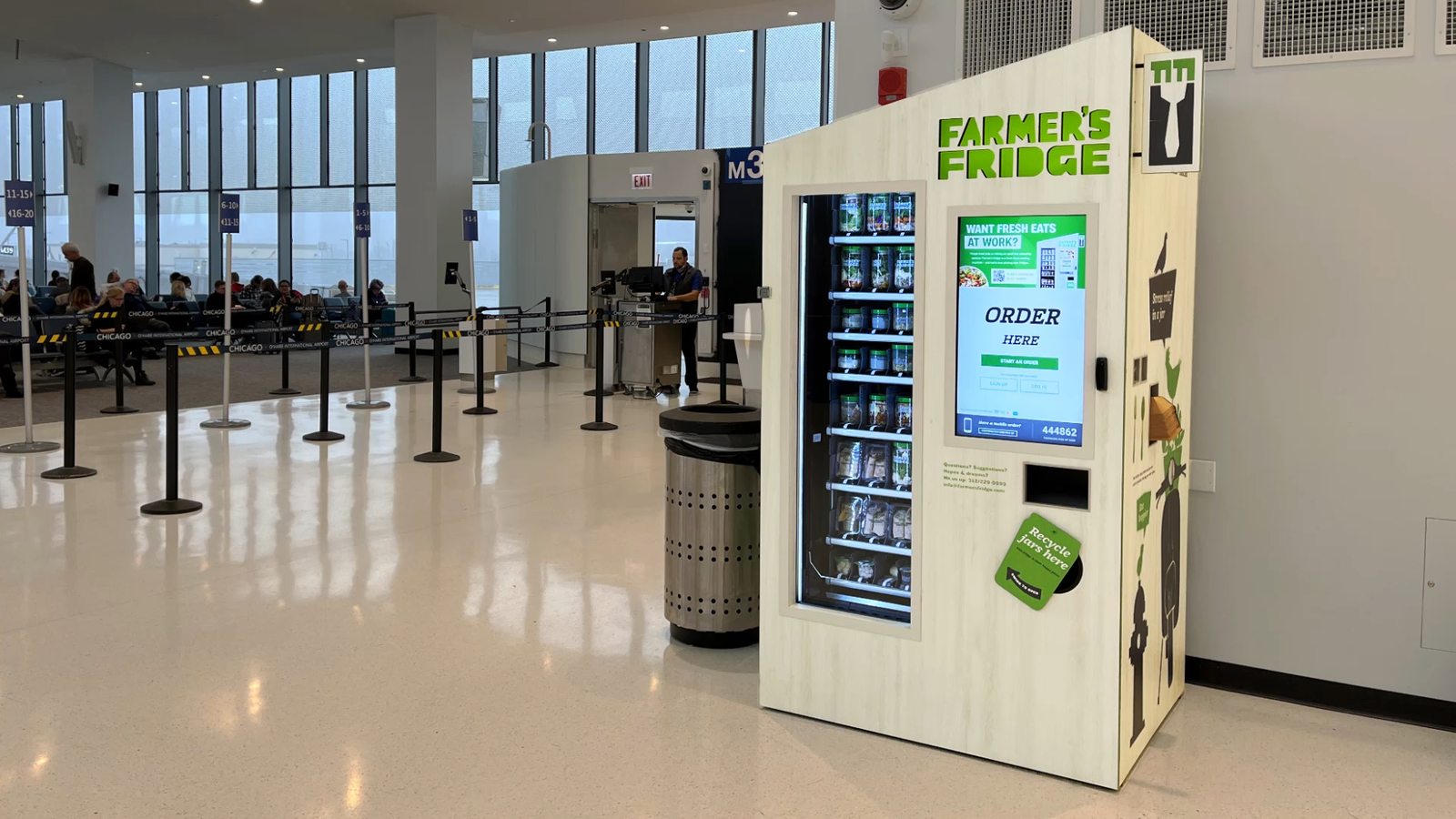
Simplifying fleet management at scale with a consolidated dashboard
For Farmer's Fridge, operating nearly 2,000 smart fridges across 22 markets means managing connectivity in every type of location imaginable: hospital basements, airport terminals, office buildings, and everywhere in between. Hologram gives their team a single source of truth to monitor and manage their entire connected fleet without needing to become IoT experts. With real-time visibility into device status and connectivity across all locations, Farmer's Fridge can ensure their fridges stay online and transactional 24/7. That reliability is critical: their entire supply chain model depends on data flowing from each fridge to determine what inventory to send where overnight.
Before Hologram, managing connectivity was a constant distraction that pulled the Farmer's Fridge team away from their core mission of making healthy food accessible. Now, with intuitive fleet management tools and proactive support from Hologram's team, they've cut their IoT costs in half while actually improving uptime and service quality.
As CEO Luke Saunders put it, having a reliable connectivity partner "allows us to focus on our core competency—making healthy, fresh food and getting it to people without worrying if they can purchase it." With plans to scale to 100,000 locations, Hologram enables Farmer's Fridge to manage diverse deployments across carriers and geographies without adding operational complexity.
Putting the trends to work in your deployment strategy
The cellular IoT landscape in 2026 offers more options than ever, but that abundance of choice can be overwhelming when you're making decisions that will impact devices deployed for five or ten years. The key is choosing technologies and partners that give you room to adapt as your needs evolve.
Checklist to future-proof devices shipping today
When selecting connectivity technologies and partners for devices deploying in 2026, a few factors stand out. Multi-mode modules that support multiple cellular technologies (like LTE-M, NB-IoT, and potentially RedCap) maximize network compatibility. eSIM capability lets you change carriers without hardware modifications. Hardware security with secure elements for cryptographic key storage protects against attacks. Global coverage through multi-carrier access beats single-carrier contracts. API-first management enables programmatic control and integration. Long-term network support with carrier commitments extending through your device's expected lifespan gives you confidence in your technology choices.
Hologram's global connectivity platform provides access to 500-plus carrier networks worldwide through a single SIM and unified management interface. Our multi-carrier approach means your devices automatically connect to the best available network, and you can switch carriers remotely if coverage or pricing needs change. The platform includes real-time diagnostics, flexible APIs, and transparent pricing—so you spend less time troubleshooting connectivity and more time building your core product.
Get started with Hologram's global IoT connectivity solutions to simplify deployment and management across your entire device fleet.
FAQs
How can I forecast monthly data usage for RedCap devices?
RedCap data consumption varies significantly by application. Video surveillance might use 1 to 5 GB per month, while industrial sensors transmitting periodic readings could use 100 to 500 MB. The best approach is monitoring pilot deployments closely and factoring in 20 to 30% overhead for security protocols, firmware updates, and device management traffic.
What certification updates should I expect for NTN modules?
NTN-capable modules require additional certifications for satellite network compatibility beyond standard cellular approvals. Certification timelines often stretch 6 to 12 months, and costs run higher as testing procedures are still being standardized across different satellite networks and regulatory bodies. Budget extra time and work closely with your module manufacturer to understand specific requirements for your target markets.