How Fleetsu solved global telematics with a single SIM from Hologram
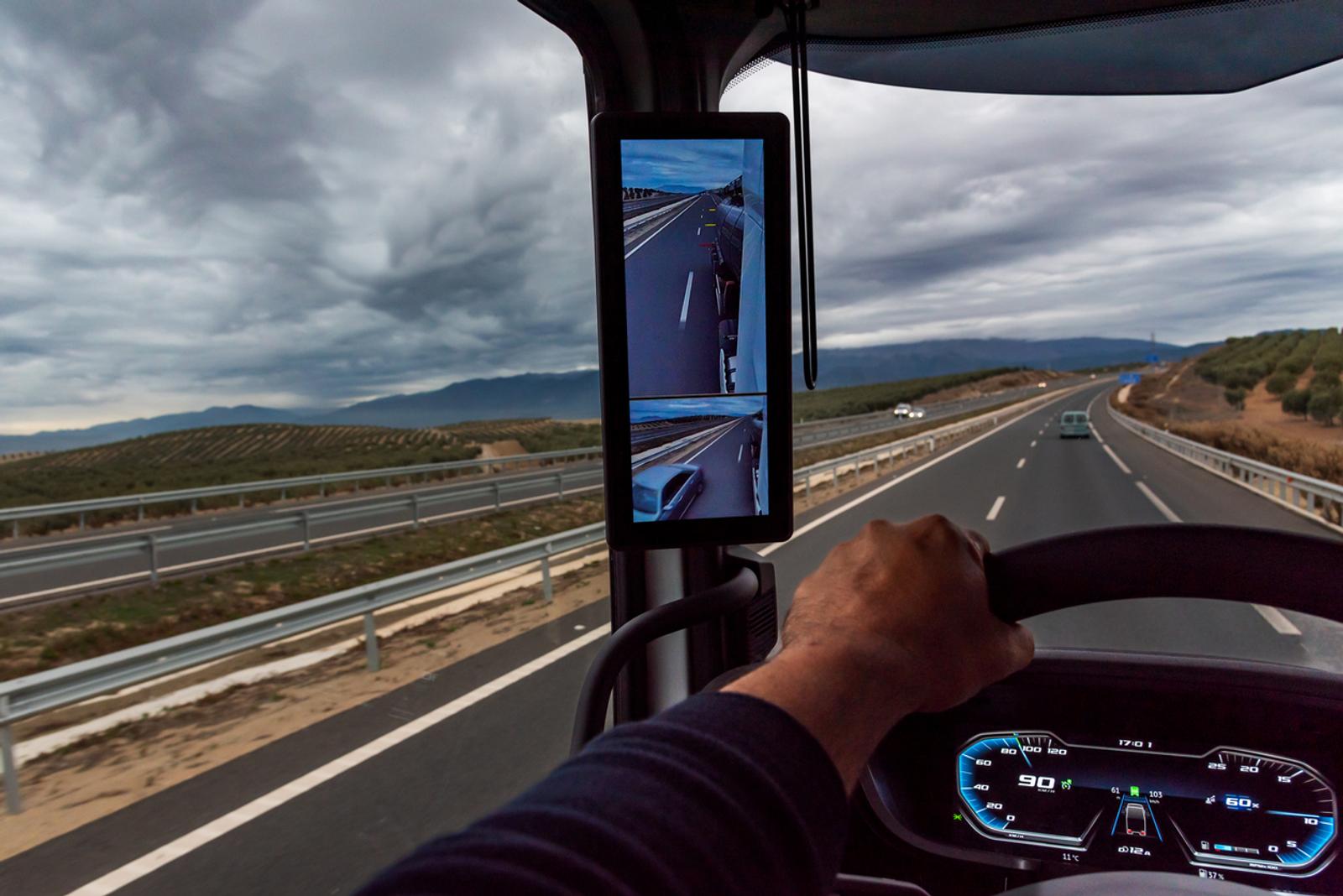
Telematics systems are only as good as their underlying connection. Hologram helps ensures real-time data flow, allowing fleet managers to receive crucial information seamlessly.
Global expansion shouldn't mean juggling twenty different carrier contracts. Here’s how one Hologram customer, Fleetsu, expanded their reach with our cellular IoT connectivity and became the leading fleet telematics provider in the Asia Pacific region.
The challenge: Scaling without complexity
Fleetsu had established itself as a leading telematics provider in the Asia Pacific region, with over 6,000 mobile assets deployed across Asia, Africa, and the Caribbean, leveraging the Amazon AWS IoT cloud for analytics. But, their next phase—expanding into India, Europe, and North America—presented a daunting operational reality.
This geographic expansion brought geometric complexity in dealing with multiple carriers. Managing reliable cellular connections across multiple territories meant:
- Twenty different SIM platforms to coordinate
- Multiple carrier contracts and negotiations
- Varied pricing models across regions
- Dispersed teams needing coordinated connectivity management
For a business where data is one of the highest-cost items, this complexity threatened to drain resources that should be focused on customers.
We don’t want to have five people managing 20 different SIM platforms and the development team trying to work with all these different systems. The operational overhead would slow the company down.
- Adam Rickets, Head of Product, Fleetsu
The solution: A single SIM card, everywhere
After inviting wireless vendors to bid, Fleetsu selected Hologram for a straightforward reason: global connectivity without the headache. Hologram's offering centered on providing a single SIM card that works across all geographies. Hologram's Dashboard allows Fleetsu's distributed team to manage connectivity from one central platform.
Hologram's contract was notably simpler and more transparent compared to competitors, who often required extensive negotiations due to tiered pricing.
The results: Efficiency at scale
Today, Hologram SIMs are standard in every device Fleetsu deploys. The impact shows up in day-to-day operations:
Instant global deployment. A device shipped to Fiji or India powers up and comes online immediately. Fleetsu hasn't found a carrier Hologram doesn't support.
Simplified cost management. The ease of receiving a single invoice for all devices worldwide simplifies cost tracking and planning dramatically when data is a primary expense.
Resources redirected to customers. Fleetsu achieved significant operational efficiency, allowing them to redirect resources toward customer needs.
Whether the customer is in Fiji or India, we can ship them a device, they power it up and it’s online. We haven’t found a carrier that Hologram doesn’t support, and if we did we can reconfigure over the air.
- Adam Rickets, Head of Product, Fleetsu
The Toyota partnership
With reliable global connectivity in place through their fleet management platform, Fleetsu was positioned for bigger opportunities. They partnered with Toyota Australia to launch Toyota Halo, a new service offering that utilizes connected vehicle technologies and near real-time data.
Toyota Halo is designed to help business customers optimize fleet operations and improve efficiency. The platform is a fully integrated connected solution, providing a developing suite of smart features that enable companies in Australia to effectively run and control their fleet operations. Using near real-time data to help reduce business costs, the platform achieves this by processing extensive data from thousands of vehicles, providing valuable insights used to optimize operations and increase productivity, time, and cost efficiencies.
Toyota Halo is a scalable solution designed for businesses of all sizes, from large national fleets to small local businesses. It is compatible with most Toyota models manufactured from 2019 onward, including popular vehicles such as the Camry, HiLux, RAV4, and Corolla. The platform also features advanced capabilities like real-time location alerts, informing managers of important events such as vehicles entering job sites or reaching maximum utilization.

Why connectivity matters for fleet telematics
The Fleetsu story illustrates why connectivity isn't just a feature—it's the foundation. Here's how video and telematics systems actually work, and why the cellular link matters so much.
How fleet telematics systems function
Fleet telematics combines onboard hardware, wireless networks, and cloud-based software to provide real-time insights into vehicle performance, location, and driver behavior. The process unfolds in four stages:
Data collection
A small hardware device, often called a "black box," is installed in the vehicle, typically connecting to the engine's onboard diagnostics (OBD-II) port. This telematic device uses a GPS receiver and internal sensors (like accelerometers and gyroscopes) to capture data on a wide range of metrics, including location, speed, fuel consumption, engine health codes, sudden acceleration, harsh braking, and idling time. High-definition cameras are then integrated with the telematics system. These can be forward-facing (viewing the road), driver-facing (monitoring in-cab activity like distraction or fatigue), or cover blind spots around the vehicle. Modern systems use artificial intelligence (AI) to analyze the video feed locally (at the "edge").
Data integration
The video footage is seamlessly combined with the specific data points collected by the telematics sensors. For example, a harsh braking event detected by the accelerometer is linked with the video clip, location, and time stamp from that exact moment, providing context to the event.
Transmission
The integrated data is transmitted wirelessly via cellular networks (like 4G/5G) or satellite communication to a secure cloud-based server. Event-triggered incidents (e.g., a collision or an SOS alert) are typically uploaded instantly for real-time review.
Analysis and action
Fleet managers access the data through a web-based software platform or mobile application. The software analyzes the vast amount of raw data and presents it in user-friendly dashboards and reports for analysis. The system can provide real-time alerts to both the driver (often verbal in-cab notifications) and the fleet manager when risky behavior or an incident is detected, allowing for immediate correction or response. The data provides irrefutable evidence in case of an accident or false insurance claim, helping to quickly determine fault and protect innocent drivers and the company from liability and legal costs.
The cellular IoT advantage
This connectivity infrastructure is driving massive market growth. The market for cloud-based fleet management is expected to jump from $32.34 billion this year (2025) to $116.56 billion by 2032—that's a huge 19.76% annual growth rate.
Cellular IoT technology provides the necessary connectivity for real-time visibility and tracking. Real-time tracking relies on a GPS-based system to locate vehicles continuously. This feature is vital in emergency situations, allowing managers to quickly find a driver's location and send help if an accident occurs on the road. The ability to issue updates and revise itineraries in real time also significantly reduces waste and enables fleets to adapt quickly to traffic patterns, ensuring efficient routes.
The operational backbone of fleet efficiency depends upon reliable and manageable cellular data connections. Specialty IoT devices go beyond location tracking to capture fine-grained telematics data about the vehicle itself.
- Pat Wilbur, CTO, Hologram
For instance, using sensors and remote diagnostic systems, managers can monitor engine performance to improve fuel efficiency, set service reminders for tasks like oil changes, and troubleshoot problems before they trigger a costly breakdown. In-vehicle sensors can also be used to check for safety compliance by tracking speed, idle time, stops, or off-route miles. This continuous data capture ensures improved regulatory compliance and overall fleet efficiency.

Why Fleetsu chose Hologram as their telematics provider
The Fleetsu partnership demonstrates three key strengths that make Hologram the optimal cellular IoT provider for global fleet operations.
Global connectivity and simplified deployment
Hologram offers the ability to use a single SIM card across all geographies. Fleetsu noted that they have not found a carrier Hologram doesn't support, meaning they can ship a device to any customer—from India to Fiji—and it will power up and be online immediately. This eliminates the massive complexity of negotiating separate carrier contracts in every new region, simplifying the deployment of global telematics solutions.
Operational efficiency and cost transparency
Hologram provides straightforward contracts and consolidated pricing, which significantly speeds up deployment. For businesses where data is a primary expense, the convenience of receiving just a single invoice for all deployed devices worldwide simplifies cost tracking and planning dramatically. Fleetsu utilizes the Hologram Dashboard to easily manage connectivity across its entire global team.
Responsiveness and support
The human element of the partnership was crucial for Fleetsu. Hologram earned the business through its responsiveness, delivering test SIMs quickly and making senior staff available to answer questions and ensure the pilot's success, even across challenging time zone differences.
The team is very responsive. I’d recommend Hologram both for their platform and their people.
- Adam Rickets, Head of Product, Fleetsu