Connectivity
Cellular connectivity and SIM management for edge AI deployments
Cellular connectivity and SIM management keep edge AI devices online, observable, and simple to scale across global fleets.

August 27, 2026
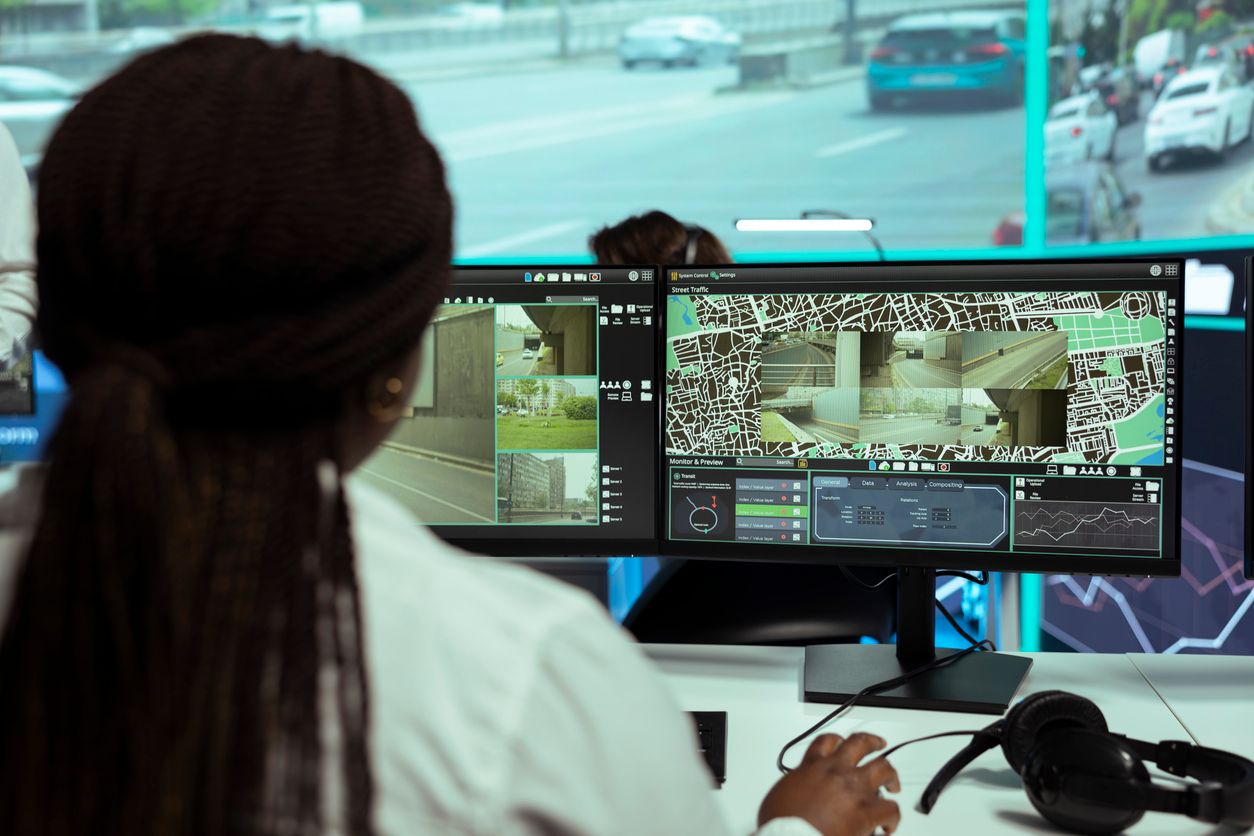
Edge AI and AI vision are moving intelligence into the field, from factory cameras to remote sensors. Getting cellular connectivity and SIM management for edge AI and AI vision deployments right is what keeps those devices online, observable, and current. This guide covers what edge AI is, why connectivity still matters when inference runs locally, and how to manage SIMs at scale.
Key takeaways
- Edge AI requires connectivity: Even when inference runs locally, devices need reliable connectivity to report results, receive model updates, and stay observable.
- Connectivity requirements vary: To scale effectively, edge AI deployments need to balance coverage, latency, and bandwidth requirements, often necessitating multi-network access and 4G/5G capabilities.
- SIM technology simplifies deployment: Using eSIM and eUICC technology allows for remote profile switching and global fleet management, eliminating the need for physical SIM swaps.
- Reliability is critical for uptime: Advanced features like independent dual-core failover and satellite fallback ensure that mission-critical real-time inference remains operational during outages or in remote, off-grid locations.
What is edge AI, and how does AI vision fit in?
Edge AI is artificial intelligence that runs its inference on the local device instead of the cloud. In plain terms, the model makes decisions where the data is created.
AI vision is edge AI applied to cameras and image data. A device can read a license plate, spot a defect, or count objects on its own.
The gap from cloud AI comes down to four gains. Edge AI cuts latency, because data does not travel to a distant server. It also protects privacy, since raw images can stay on the device.
It keeps working during network gaps, and it sends less data overall. You can see this across many AI and IoT applications, from smart cities to healthcare.
Still, local inference does not remove the need to connect. It changes what you send and when.
Why cellular connectivity is critical for edge AI and AI vision
Even when inference runs on the device, edge AI still needs connectivity for three jobs. It sends results, receives model updates, and stays observable.
A camera that spots a defect has to report it. A model that improves has to reach the fleet. Cellular connectivity covers these jobs where Wi-Fi and wired links do not reach.
The stakes are rising fast. Per edge AI market growth data from Grand View Research, the global edge AI market was valued at 24.9 billion USD in 2025. The same forecast projects 118.7 billion USD by 2033, a compound annual growth rate of 21.7%.
Cellular fits because it works almost anywhere and carries both routine telemetry and heavier video. Cradlepoint notes that for mission-critical, 5G connected edge AI work, a cellular primary or backup link can help keep operations running.
Pat Wilbur, CTO at Hologram, sees the same pull toward reliable cellular in cellular IoT and robotics. He points to rising demand for cellular IoT so teams can put edge data to real use.
Key connectivity requirements: coverage, latency, and bandwidth
Start with the core question: what does an edge AI device need from its connection? It must reach a network anywhere, respond fast enough for real-time work, and move data without runaway cost.
Coverage comes first, because a device that cannot find a signal cannot work. Rural, mobile, and cross-border sites need access to more than one network.
Latency matters when a decision or control loop must happen in near real time. High latency can make a safety check or a control signal arrive too late to be useful.
Bandwidth matters most for AI vision, where video and image streams are demanding.
The table below maps each requirement to what to look for in a connectivity partner.
| Requirement | Why it matters for edge AI | What to look for |
|---|---|---|
| Coverage | Devices deploy in rural, mobile, and cross-border sites | Access to many carriers and countries on one SIM |
| Latency | Real-time inference and control need fast round trips | Low-latency routing and modern 4G or 5G networks |
| Bandwidth | AI vision video and image uploads are data-heavy | Plans and performance that handle large transfers |
| Resilience | An outage stops reporting and updates | Multi-network failover and clear uptime terms |
Hologram's global IoT SIM cards reach more than 550 carriers in over 190 countries. They deliver speeds up to 300 Mbps and latency as low as 50 ms, covering telemetry and AI vision on one SIM.
SIM options for edge AI fleets: SIM, eSIM, iSIM, and multi-IMSI
Your SIM choice shapes how easily you deploy, switch carriers, and scale. There are four main options: physical SIM, embedded SIM (eSIM), integrated SIM (iSIM), and multi-IMSI (multiple international mobile subscriber identity). Many fleets combine them, and you can go deeper in this overview of types of SIM cards.
| SIM type | How it works | Best for |
|---|---|---|
| Physical SIM | A removable card you insert by hand | Small fleets and simple, fixed sites |
| eSIM and eUICC | A chip that holds and swaps profiles remotely | Global fleets that need remote changes |
| iSIM | SIM built into the device processor | Space-constrained and high-volume designs |
| Multi-IMSI | One SIM that carries several network identities | Fleets that switch carriers dynamically |
Physical SIM cards
A physical SIM is the removable card most people know. It works well for small or fixed deployments. Changing carriers usually means visiting the device, which does not scale.
eSIM and eUICC
An embedded SIM is soldered into the device. The eUICC is the technology that lets it store and swap carrier profiles over the air. This removes truck rolls, because you can change networks after devices ship.
iSIM
An integrated SIM builds the SIM into the device's main processor. It saves space and cuts cost at scale. This suits high-volume, compact designs like small AI vision cameras.
Multi-IMSI SIMs
A multi-IMSI SIM carries several network identities on one SIM. It can switch between carrier profiles to find a better signal or price. This helps in regions where one carrier's coverage is patchy.
Remote SIM provisioning and SGP.32 for IoT
Remote SIM provisioning (RSP) loads and changes carrier profiles on an eSIM over the air, with no physical swap. It relies on a bootstrap profile, a starter connection that brings the device online. A strong design keeps that bootstrap as a fallback if provisioning fails.
Standards make this work across vendors. The GSMA's M2M eSIM specification shows the first remote provisioning architecture was published in 2014 for machine-to-machine devices. SGP.32 is the newer standard built for IoT, and it fits devices with no screen.
You can read a plain-language take in Hologram's SGP.32 eSIM standard explainer.
The GSMA SGP.32 specification describes remote provisioning and management of the eUICC in IoT devices with limited networks or no user interface. SGP.32 readiness is worth asking for now, because it protects your ability to switch and scale later. It also helps with permanent roaming rules, where localized profiles keep devices compliant.
Managing SIMs across a global edge AI fleet
Once devices ship, the work shifts to managing SIMs at scale. Good management means zero-touch deployment, over-the-air updates, and carrier switching after launch. The goal is to run thousands of SIMs from one place.
A dashboard and APIs give you that control. Hologram pairs a real-time dashboard with APIs so teams can see usage, set alerts, and act in bulk. This is the foundation for managing eUICC profiles at scale.
Its orchestration tool, Conductor, adds policy-based control:
- Policy-based switching: rules move devices between profiles automatically
- API-triggered changes: switch profiles from your own systems on demand
- Bulk recovery: bring many devices back online from one control surface
Hologram launched Conductor in 2026 to coordinate profile switching, network routing, and automated provisioning across thousands of devices from a single control surface.
Reliability and failover for real-time inference
For edge AI, an outage is not just lost data. It stops real-time inference, which can halt a production line or a safety check. That makes reliability a core requirement.
There are two levels of protection. Multi-network roaming lets a SIM try another carrier when one network is weak. True core failover runs two independent mobile cores, so traffic keeps flowing if a whole core fails.
The second level is what mission-critical work needs.
Hologram's Outage Protection SIMsuse two independent mobile cores and switch to the backup automatically. If one core fails, traffic reroutes to the other without a site visit or a hardware swap. That reliability shows up at scale, because Hologram backs connectivity with a contractual 99.95% uptime guarantee and 100% historical Hologram platform reliability to date, while transmitting more than 3TB of data daily.
Deploying AI vision in remote and off-grid locations
Remote sites add two hard constraints: limited power and no fixed network. Think maritime routes, remote farms, and energy sites far from town.
Edge AI fits these places well. On-device inference means a camera can send only high-value results instead of a constant video stream.
This local-first approach controls both bandwidth and cost. When a device decides what matters before it transmits, it moves less data over cellular. That keeps AI vision affordable where data is expensive.
Connectivity still has to hold up when cellular alone cannot. Hologram offers a cellular-first, satellite-fallback design on a single SIM. A device stays online even when it drifts out of cellular range.
This particularly suits agriculture, energy, and long-haul transportation, where coverage gaps are common.
Cellular connectivity and SIM management for edge AI and AI vision deployments
Reliable field AI depends on two things working together: strong connectivity and simple SIM control. Cellular connectivity and SIM management for edge AI and AI vision deployments turn scattered devices into a fleet you can trust.
These are the core Hologram capabilities that support cellular connectivity and SIM management for edge AI and AI vision deployments:
- Global eUICC Hyper SIMs: one global SKU that swaps carrier profiles over the air, with no hardware change
- Broad coverage: access to more than 550 carriers in over 190 countries, with speeds up to 300 Mbps and latency as low as 50 ms
- Outage Protection SIMs: two independent mobile cores with automatic failover, backed by a contractual 99.95% uptime guarantee
- Conductor SIM orchestration: policy-based profile switching, API-triggered switches, and bulk recovery from one control surface
- Remote SIM provisioning: over-the-air profile updates with a bootstrap fallback, plus SGP.02 and SGP.32 support
- Hybrid satellite fallback: cellular-first connectivity with satellite fallback on a single SIM for remote sites
- Dashboard and APIs: real-time visibility, alerts, and bulk actions for managing SIM fleets at scale
Best practices for edge AI connectivity and SIM management
Strong edge AI connectivity and SIM management comes down to a few habits. Use this checklist to cut operating risk before you scale.
- Start with latency-critical use cases: prove the hardest real-time workloads first
- Design for a single global stock-keeping unit (SKU): use one eUICC SIM you can provision anywhere
- Require SGP.32 readiness: protect your ability to switch and scale later
- Plan monitoring and incident response: set alerts and clear recovery steps early
- Pilot before you scale: test coverage and failover in the real environment
- Judge total cost of ownership: look past price per MB to reliability and support
The thread through all six is reliability at scale. A partner that educates you and stands behind clear uptime terms beats the lowest sticker price.
FAQs
Why does connectivity still matter if inference is local?
Local inference still has to send results, get model updates, and stay observable. Reliable connectivity is what makes an edge AI device useful in production.
What is the difference between an eSIM and a traditional SIM?
A traditional SIM is a removable card you swap by hand. An eSIM is a built-in chip that can download and switch carrier profiles over the air.
What is multi-IMSI (multiple international mobile subscriber identity), and when is it useful?
Multi-IMSI is one SIM that carries several network identities. It helps devices switch carriers for better coverage or price where one network is patchy.
Can I switch carriers after devices are deployed?
Yes. With an eSIM and remote SIM provisioning, you can change carrier profiles over the air, with no site visit.
What is permanent roaming, and why does it matter?
Permanent roaming is when a device runs indefinitely on a network outside its home country. Because some carriers and countries restrict it, localized profiles help keep global fleets compliant.
Connect your edge AI fleet with Hologram
Ready to connect and manage your edge AI fleet with reliable global cellular? Get started with Hologram.