E-BOOK
The hidden costs of cellular IoT revealed

When planning and deploying cellular IoT solutions, businesses often focus on the visible costs, such as hardware, connectivity plans, and initial setup expenses. However, the reality is that many hidden costs can emerge over time and significantly impact the total cost of ownership (TCO).
These hidden costs are frequently overlooked, leading to unexpected budget overruns, operational inefficiencies, or even project failure. From overage charges and roaming fees to downtime and network compatibility challenges, the true cost of deploying and maintaining IoT devices can be much higher than anticipated. Recognizing and addressing these hidden costs is key to successfully implementing an IoT strategy that is both scalable and sustainable.
To help businesses identify and overcome these hidden expenses, Hologram provides a globally connected, developer-friendly, and future-proof IoT connectivity platform. Offering tools like eUICC-enabled SIMs, flexible pay-as-you-go pricing, a centralized dashboard, and a secure, reliable global network, Hologram enables organizations to connect, manage, and scale their IoT deployments efficiently.
Supported by real customer success stories, this guide will highlight ten key hidden costs of cellular IoT deployments and demonstrate how Hologram’s innovative solutions enable businesses to mitigate these challenges—saving time, money, and resources along the way.
Ten hidden costs of cellular IoT deployments
Let’s dig deeper into each of these ten hidden costs and explore how real-world businesses partnered with Hologram to minimize their expenses and maximize their business.
Overage charges
When deploying IoT devices, unexpected overage charges can emerge as a significant pain point, often catching businesses off guard when actual data consumption surpasses the limits outlined in their service plans. Seemingly small issues such as firmware updates, software bugs, or simply misconfigured devices transmitting data more frequently than planned, can quickly amplify usage.
These occurrences multiply across a fleet, turning into substantial unexpected expenses. The unpredictable nature of IoT devices only intensifies the challenge, with businesses struggling to predict consumption fluctuations or track irregular usage patterns.
Overages can cause significant financial strain, particularly in industries that rely on data-heavy applications, such as healthcare, agriculture, or transportation. For example, a malfunctioning IoT sensor stuck in a repetitive communication loop or an operational emergency demanding higher-than-normal data usage can result in unexpected spikes in costs, eroding budgets unexpectedly. Without proactive cost monitoring, these overages can derail even the most carefully planned IoT budgets.
- Chief Financial Officers (CFOs) and Operations Managers care greatly about overage charges, as these costs can significantly affect operational budgets and profitability.
- The risk of unanticipated expenses or budget overruns makes proactive monitoring tools critical for financial and operational stability.
- High or unoptimized data usage could lead to ballooning budgets, particularly for IoT use cases requiring large-scale data transfers (e.g., video streaming or predictive analytics).
The ROI with Hologram has been exceptional. We were able to cut our IoT bills in half.
Hologram mitigates challenges through its flexible, transparent, pay-as-you-go pricing model that delivers cost predictability, scales with your needs, and data sharing across devices allows businesses to balance usage within their fleets, avoiding individual device penalties. Hologram also equips users with usage monitoring tools via its intuitive dashboard, allowing real-time tracking of data consumption to help organizations set alerts and create plans that prevent overspending.
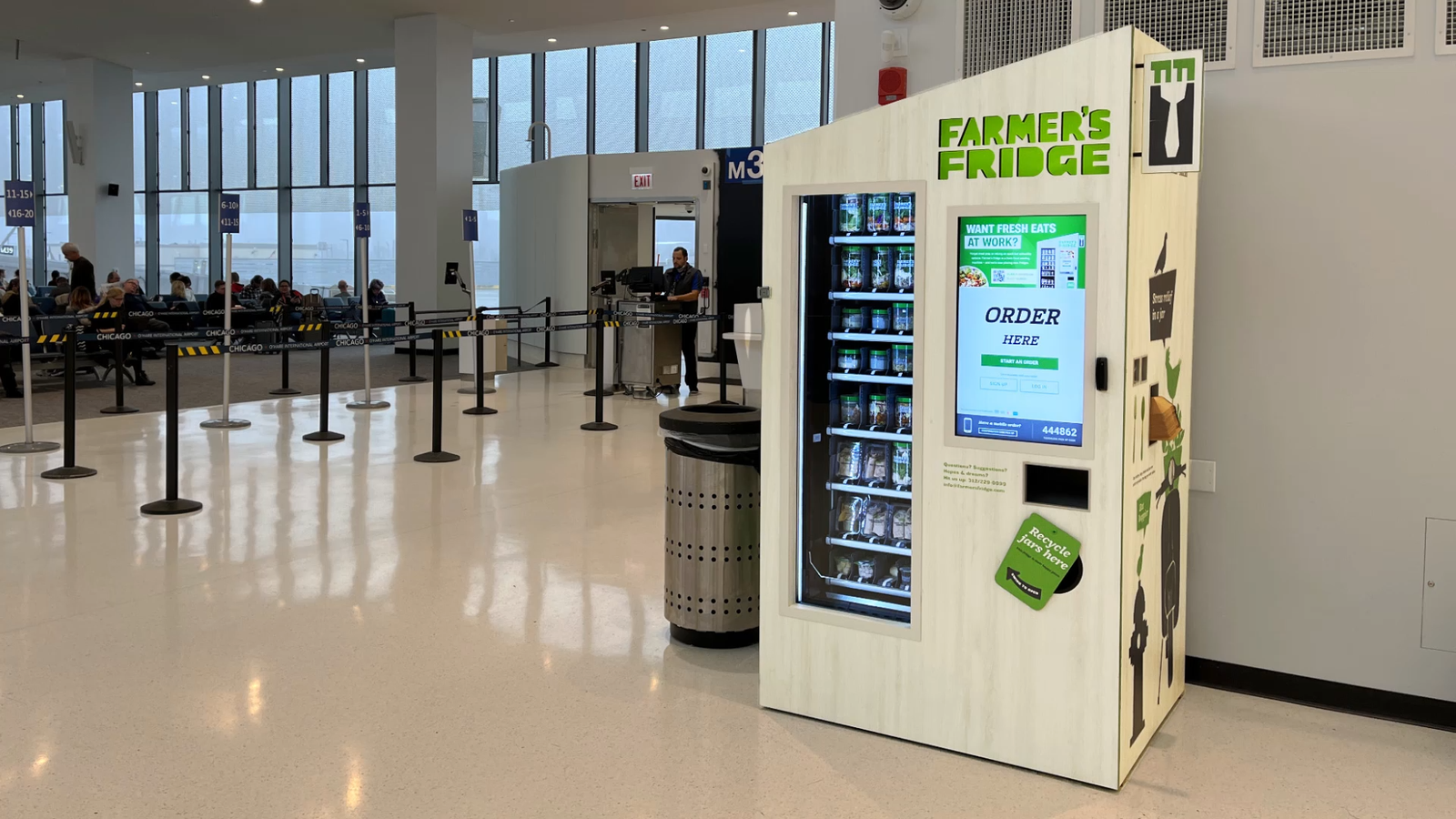
Read more about Farmer's Fridge and how Hologram delivered an extremely smooth cutover from their previous provider with no issues.
Roaming fees
IoT devices frequently operate internationally, where unforeseen region-specific roaming fees often quietly accumulate. These charges catch businesses off guard—sometimes without detection—until they receive an unexpected and inflated bill. When devices cross borders or operate offshore, they may switch to networks outside the boundaries predetermined by their primary carrier. Loss of direct control over these connections leads to mounting roaming costs, often compounded by a lack of clear visibility into network performance or carrier behavior.
Global applications like logistics trackers, agricultural sensors in rural landscapes, and smart devices in remote areas run an even greater risk, with such hidden costs disproportionately affecting these industries. Without tools to consistently monitor or control devices across networks, reconciling costs or simplifying operations becomes an ongoing struggle, compounding the financial burden for businesses and operational teams.
- Global Supply Chain Managers and Logistics Managers are greatly impacted by roaming fees, as these professionals must ensure seamless cross-border IoT operations without being blindsided by excessive costs.
- Reducing roaming expenses is key to maintaining both profitability and operational efficiency in international markets.
The tools that Hologram gives you to keep track of data and fleets are amazing. It was especially useful for devices when they’re outside of the US.
By using global multi-carrier SIMs, Hologram ensures that IoT devices automatically connect to the best available local networks without accruing international roaming charges. By accessing 550+ networks across 190+ countries, Hologram eliminates the need for separate agreements with regional carriers, simplifying global deployments with consistent pricing.
Learn how Hologram is helping Arable manage their connectivity costs to deliver real-time data for predictive analytics.
SIM card replacement
Physical SIM card replacements introduce hidden logistical and financial burdens that aren’t immediately apparent during the deployment planning phase. For devices distributed across vast geographic regions—or for companies operating in rural, offshore, or remote locations—swapping out SIM cards creates additional layers of complexity. This includes the cost of manual labor, delays in business operations, shipping logistics, and, most notably, downtime for the devices involved.
When these replacements occur at scale—spanning hundreds or even thousands of devices across industrial sites, agricultural land, or large logistics operations—they wreak havoc on financial and operational efficiency. Truck rolls, especially to remote areas, not only drive up costs but also cause cascading negative effects on timelines and service continuity, all of which impair business functionalities.
- IT Managers and Field Operations Directors prioritize minimizing the need for SIM card replacements, given the time and labor-intensive processes involved.
- These roles often oversee large-scale distributed systems where simplified remote management significantly reduces daily operational barriers.
Our manufacturer inserts the Hologram SIM card and sets it in Test Mode, then the device automatically activates once it transmits a set amount of data. We don’t have to insert the SIMs ourselves or manually keep track of which SIMs are where.
Hologram solves this problem with its eUICC-enabled SIM cards, which eliminate the need for physical SIM replacements. Remote carrier profile switching allows businesses to manage connectivity over the air, without needing to send teams into the field, saving both time and money.
Explore how Vital Health Links is using Hologram to make global expansion easy.
Hardware compatibility and obsolescence
The ever-evolving cellular ecosystem presents challenges for IoT deployments, especially when legacy technologies like 2G and 3G networks are phased out to make room for LTE and 5G. These changes force businesses to undergo costly hardware or device-level upgrades to maintain their connectivity. Often underestimated during the initial design phase, hardware obsolescence creates sudden disruptions mid-deployment, sidelining IoT projects unless businesses reinvest in compatible solutions.
This lifecycle disconnect is especially debilitating for large-scale deployments that rely on long-term functionality—resulting in premature expenditures on equipment replacement. Without preemptive safeguards, businesses are left struggling to adapt, with operational pauses affecting everything from manufacturing machines to logistics trackers and healthcare devices.
- CTOs (Chief Technology Officers) and Hardware Engineers are particularly concerned with hardware compatibility to ensure IoT deployments remain viable as networks evolve.
- They seek scalable solutions to avoid interruptions in long-term technology roadmaps.
As we scale up, consistency is one of the biggest benefits of working with Hologram.
Hologram addresses this issue by providing future-ready, eUICC-enabled SIM cards that support legacy networks alongside LTE, LTE-M, 5G, and NB-IoT. Businesses can extend the lifecycle of their devices and avoid large-scale hardware replacement expenses.
Read more how about Amper is leveraging cellular technology from Hologram to modernize manufacturing.

Troubleshooting and maintenance
As IoT fleets scale, device downtime or system failures requiring manual repair become inevitable. These fixes, while critical to restoring operations, come at a steep cost. For distributed fleets—think agricultural sensors stretched across rural properties, logistics tags on faraway shipping routes, or remote weather stations—addressing maintenance issues often requires on-site interventions that can’t be avoided.
With each service call, the financial burden rises, whether through vehicle transportation (truck rolls), skilled technician costs, or resource usage across departments. The problem compounds for global or industrial IoT deployments, where monitoring tools or automated systems aren't in place, leaving teams perpetually behind in troubleshooting recurring operational inefficiencies.
- Fleet or IoT asset managers oversee large numbers of devices and depend heavily on real-time data for decision-making.
- Managing thousands of devices manually or grappling with disconnected systems adds inefficiency and increases the risk of costly errors.
We can track down and troubleshoot the issues, right in the Hologram Dashboard.
With Hologram’s centralized Dashboard, businesses gain real-time insights into device status and network performance, enabling them to troubleshoot remotely. The developer-friendly API further allows businesses to automate tasks like firmware updates and issue resolution without on-site interventions. Hologram’s user-friendly interface and bulk control through a dashboard allow these managers to monitor, update, and troubleshoot their fleets seamlessly.
Explore how Purfresh is using the Hologram Dashboard to manage their international device fleet.
Scaling costs
Latency—the delay in data transmission—becomes a defining hidden cost in IoT deployments where real-time processing is non-negotiable. For applications like industrial automation, healthcare monitoring, or logistics tracking, even minor network delays can cascade into operational inefficiencies. Businesses relying on a seamless feedback loop from connected devices often see sharp declines in effectiveness when transmission speeds don’t meet latency-sensitive thresholds.
Over time, network lag results in lost productivity, unpredictable results, and safety disruptions in industries depending on synchronized systems. Scaling latency-sensitive applications, particularly in sectors like manufacturing or emergency response, becomes untenable unless backed by ultra-reliable networks capable of minimizing such technical bottlenecks.
These scaling-associated expenses, which frequently outpace initial deployment investments, compound year after year. Without having the right platforms to facilitate smooth scaling—whether it’s through bulk actions, automated processes, or central management—expansion efforts naturally stall due to excessive resource strain. Planning for sustainable IoT growth becomes impossible without such critical forward-looking frameworks.
- Expansion-focused roles like Business Development Managers and IoT Program Directors prioritize scalability to ensure growth opportunities are supported without increasing operational inefficiencies or diluting cost structures.
Whether the customer is in Fiji or India, we can ship them a device, they power it up and it’s online. . .I’d recommend Hologram both for their platform and their people.
Hologram’s platform is optimized for scalability, enabling businesses to easily onboard new devices through bulk actions, monitor performance at scale, and automate operations using the API. These features allow businesses to focus on expansion without the fear of excessive operational overhead.
Read how Fleetsu easily scaled for market growth with Hologram as their connectivity partner.
Latency-impact costs
For many IoT applications requiring real-time processing or minimal delay—such as industrial automation systems, telemedicine solutions, or logistics tracking—high network latency can introduce serious operational inefficiencies. Every millisecond of delay can adversely affect performance, reduce accuracy, and disrupt workflows.
In critical applications, such as healthcare or industrial manufacturing, this can lead to safety issues, lost revenue, or decreased productivity. Over time, these interruptions add hidden costs, particularly for businesses that rely on quick responses or continuous feedback loops from their devices.
- Industrial Automation Managers, Medical Directors, and Application Engineers, to name just a few, depend on low latency for real-time applications.
- Latency issues are a direct threat to the functionality of systems, impacting everything from revenue and production uptime to safety mechanisms and medical monitoring services.
We tested Hologram in one of our problematic gap zones where other providers failed, and their devices worked flawlessly.
Hologram ensures ultra low latency (as low as 50ms) with globally optimized network routing, enabling reliable connectivity even for time-sensitive IoT applications. By providing seamless, high-performance connectivity across multiple carriers, Hologram eliminates the costs associated with latency-related inefficiencies and ensures smooth operations.
Explore how Hologram delivers real-time connectivity for UgoWorks that is essential for every facet of their business.
Security risks and compliance violations
Security incidents within IoT environments present an often-overlooked, yet sizable, category of hidden costs. Without proper safeguards, businesses leave themselves vulnerable to risks like unauthorized device access, data manipulation, or breaches of personally identifiable information (PII). Such lapses not only disrupt operational integrity but also implicate businesses in compliance violations, leading to costly financial penalties and long-term reputational damage.
This challenge is amplified for companies operating in healthcare, logistics, or other highly regulated industries, where non-compliance can spawn compounding costs. As IoT expands, each unsecured or misconfigured endpoint increases the business risk of exposure.
- CIOs (Chief Information Officers) and Compliance Officers are highly invested in security and regulatory adherence.
- Failures in either area expose organizations to financial penalties, inefficiencies, and reputational harm, which their responsibilities aim to mitigate.
We made a move from standard sims to eSIMs for our newest device in order to drive down costs and ensure fleet security.
Hologram’s Software-Defined Network (SDN) provides advanced cellular IoT security by using network segmentation, firewalls, and authenticated traffic control to protect devices from unauthorized access and ensure only approved connections. With end-to-end encryption, Hologram has zero access to customer or device data and complies with global security standards like HIPAA, PCI, GDPR, and GSMA SAS.
Learn how Escavox is securely scaling their operations with Hologram.
Downtime costs
Unanticipated downtime delivers cascading consequences in IoT deployments—derailing revenue streams, productivity, and critical operations. Whether tied to unreliable provider services or network outages, such disruptions severely impact operations in sectors where continuous uptime defines the benchmark for success. In environments like agriculture or logistics, lapses in IoT coverage risk derailing harvest schedules or delivery timetables altogether.
The price of downtime accelerates sharply as interruptions persist, raising not just financial impacts but coordination losses and customer dissatisfaction. Businesses with inadequate redundancy systems spend significant effort—and budget—remedying losses after these avoidable events unfold.
- CEOs and Business Leaders care deeply about downtime costs because unplanned outages directly correlate to lost revenue, customer dissatisfaction, and reputational damage.
- Operations Managers are equally concerned, as downtime disrupts critical workflows and hampers productivity, while leadership prioritizes ensuring consistent service delivery to maintain market position and financial performance.
The flexibility that Hologram provides helped us avoid downtime despite AT&T and Verizon outages this year.
Hologram's Outage Protection SIMs, with dual-core connectivity offering 99.95% uptime and automatic failover capabilities, provide unmatched reliability to keep devices online. By switching automatically to back-up carriers during outages, Hologram helps ensure consistent IoT-enable device performance, minimizing costly disruptions caused by downtime.
Read how industry-leading physical security provider Verkada uses Hologram’s Outage Protection SIMs to get the reliability and exceptional performance they need.

Carrier lock-in
Long-term exclusivity contracts with single carriers might seem manageable during the outset of IoT project planning, but this model quickly reveals itself as restrictive. Businesses tied to proprietary carrier models often struggle to transition as performance expectations rise or better opportunities emerge. Furthermore, the penalties, switching costs, or required downtimes that come with severing carrier exclusivity can severely hinder growth.
- Procurement Teams and IT Directors both care significantly about addressing carrier lock-in.
- Procurement teams focus on maintaining flexibility in supplier agreements to avoid being tied to suboptimal contracts that restrict scalability or drive up costs over time.
- IT Directors, on the other hand, are concerned with ensuring IoT deployments remain adaptable to evolving technological demands and operational needs without being hindered by rigid carrier agreements.
Hologram gives us the ability to switch networks as needed and work with one vendor, not a lot of vendors.
Hologram eliminates carrier lock-in for cellular IoT devices by utilizing eUICC (embedded Universal Integrated Circuit Card) technology and our global network of connectivity partners. This allows devices to switch between different cellular networks (carriers) without physically changing the SIM card, providing flexibility and optimal coverage for IoT deployments.
Hologram focuses on building relationships with various carriers globally, enabling devices to seamlessly connect to the most suitable network in any given location, effectively eliminating the limitations of being tied to a single carrier.
Explore how FieldIn is leveraging Hologram's reliable connectivity to power their transition to autonomous operations.
Cross-organization best practices
Managing and planning for hidden costs in IoT deployments is a critical task that impacts numerous roles across an organization. From C-suite executives to operational managers, and from IT specialists to finance teams, each stakeholder has a vested interest in identifying and mitigating these often-overlooked expenses.
CFOs need to ensure budget accuracy and cost control, while CTOs must future-proof technology investments. Operations managers require smooth, uninterrupted processes, and compliance officers must safeguard against security risks and regulatory violations.
By proactively addressing these hidden costs, organizations can not only avoid unexpected financial burdens but also enhance operational efficiency, maintain competitive advantage, and ensure long-term success of their IoT initiatives.
The following checklist provides a starting guide for various team members to collaboratively tackle these challenges and optimize their IoT deployments.
Cost management
- Analyze potential overage charges and implement usage monitoring tools
- Evaluate roaming fees and consider global multi-carrier SIM solutions
- Plan for scaling costs and ensure scalability of IoT infrastructure
- Evaluate current carrier agreements and consider flexible connectivity options
- Explore pay-as-you-go pricing models for better cost predictability
Technology development
- Assess the need for physical SIM card replacements and explore eUICC options
- Review hardware compatibility with future network technologies (e.g., 5G)
Performance
- Optimize network latency for time-sensitive applications
- Develop strategies to minimize downtime and implement failover mechanisms
Security and management
- Implement remote troubleshooting and maintenance capabilities
- Enhance security measures and ensure compliance with industry regulations
- Set up a centralized dashboard for real-time device and network monitoring
Choose wisely
This guide is based upon conversations with our customers when they were considering Hologram. It doesn't cover everything, but it's a great place to start and provides a transparent look into the costs of cellular IoT.
By recognizing and addressing hidden costs, businesses can plan IoT deployments with a clearer understanding of total cost of ownership.Hologram’s reliable and future-proof connectivity solutions empower organizations to mitigate these expenses by offering transparent pricing models, advanced tools, reliable global coverage, low latency, and more.